EYOWO
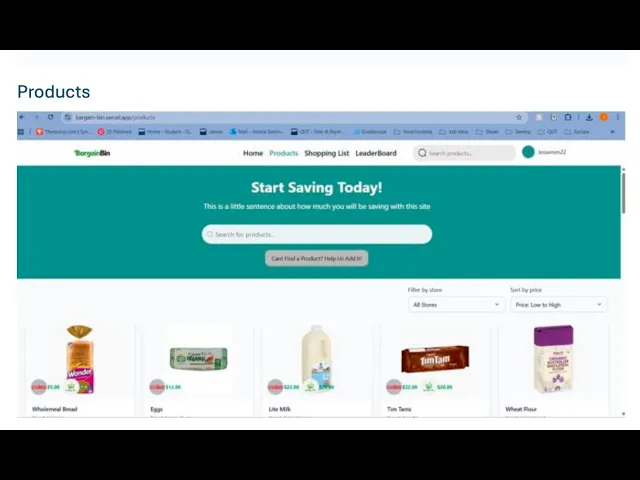
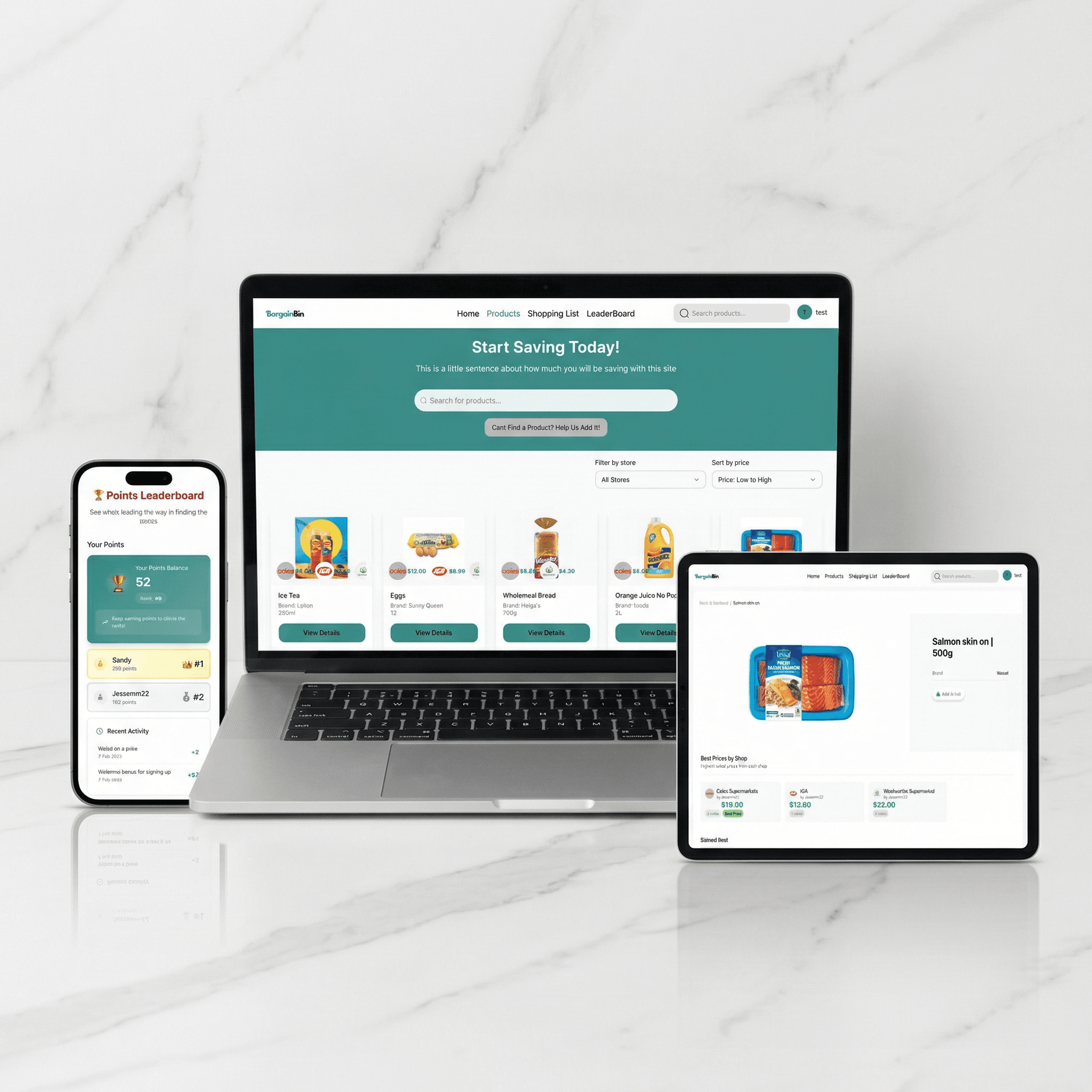
BarginBin Web App
EYOWO
Designing a trusted, fast way to discover genuine bargains without cognitive overload
UX Research
Systems Thinking
Iterative Validation
Usability Testing
Behavioral Design
End-To-End Product Design
OVERVIEW
My Role
Ux Designer & Developer, Userability Tester
Deliverables
Wireframes, Prototyes, Testing Results, Final Product
Tools
Purpose
BargainBin is a community-driven web platform that helps people compare grocery prices across stores using real, user-submitted data rather than retailer-controlled pricing feeds.
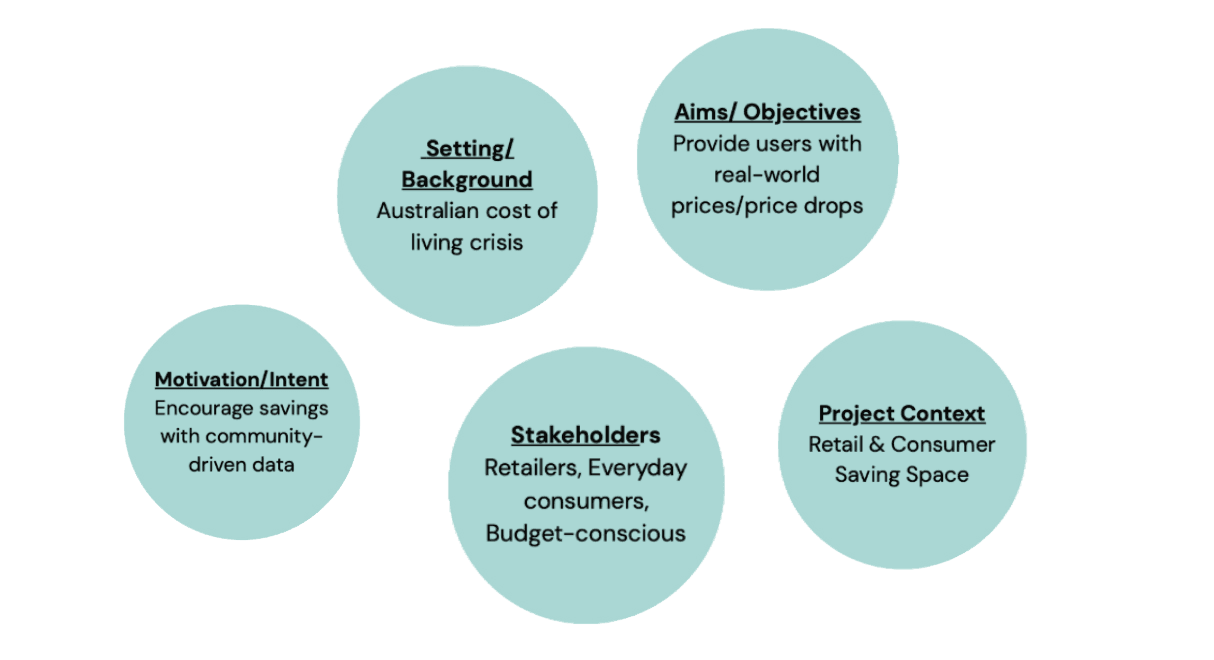
The project was developed in response to rising grocery costs in Australia, where price transparency is limited by market concentration and consumers are often forced to manually compare prices across multiple retailers. BargainBin explores how trust, accuracy, and participation can be designed into a product that relies on crowdsourced data.
I worked end-to-end across UX research, product definition, interaction design, and UI design, collaborating closely with developers and an industry partner to deliver a functional, scalable web application
Problem
& Opportunity
Consumers face increasing pressure from rising grocery prices, yet lack clear visibility into which retailers offer the best value in their local area. Major supermarket chains dominate the market, limiting transparency and making price comparison both time-consuming and unreliable.
Existing deal and comparison tools often rely on:
Retailer-controlled pricing data
Incomplete coverage of smaller stores
Discounts without meaningful context
This creates a trust gap where users are unsure whether a “deal” is genuinely good.
Opportunity:
Design a platform that enables accurate, community-verified price comparison, allowing users to save money with confidence while reducing the effort required to shop smart.
Goals
& Constraints
Product Goals
Improve price transparency across grocery retailers
Enable users to compare prices quickly and confidently
Build trust through validation rather than promotion
Deliver a scalable foundation that could grow beyond the project timeframe
Key Constraints
No web scraping due to legal and ethical concerns
Reliance on user-generated data for pricing accuracy
Fixed academic timeline with limited development capacity
Web-first delivery for accessibility and maintainability
These constraints directly shaped both the product strategy and the design decisions, pushing the platform toward crowdsourcing, verification, and simplicity
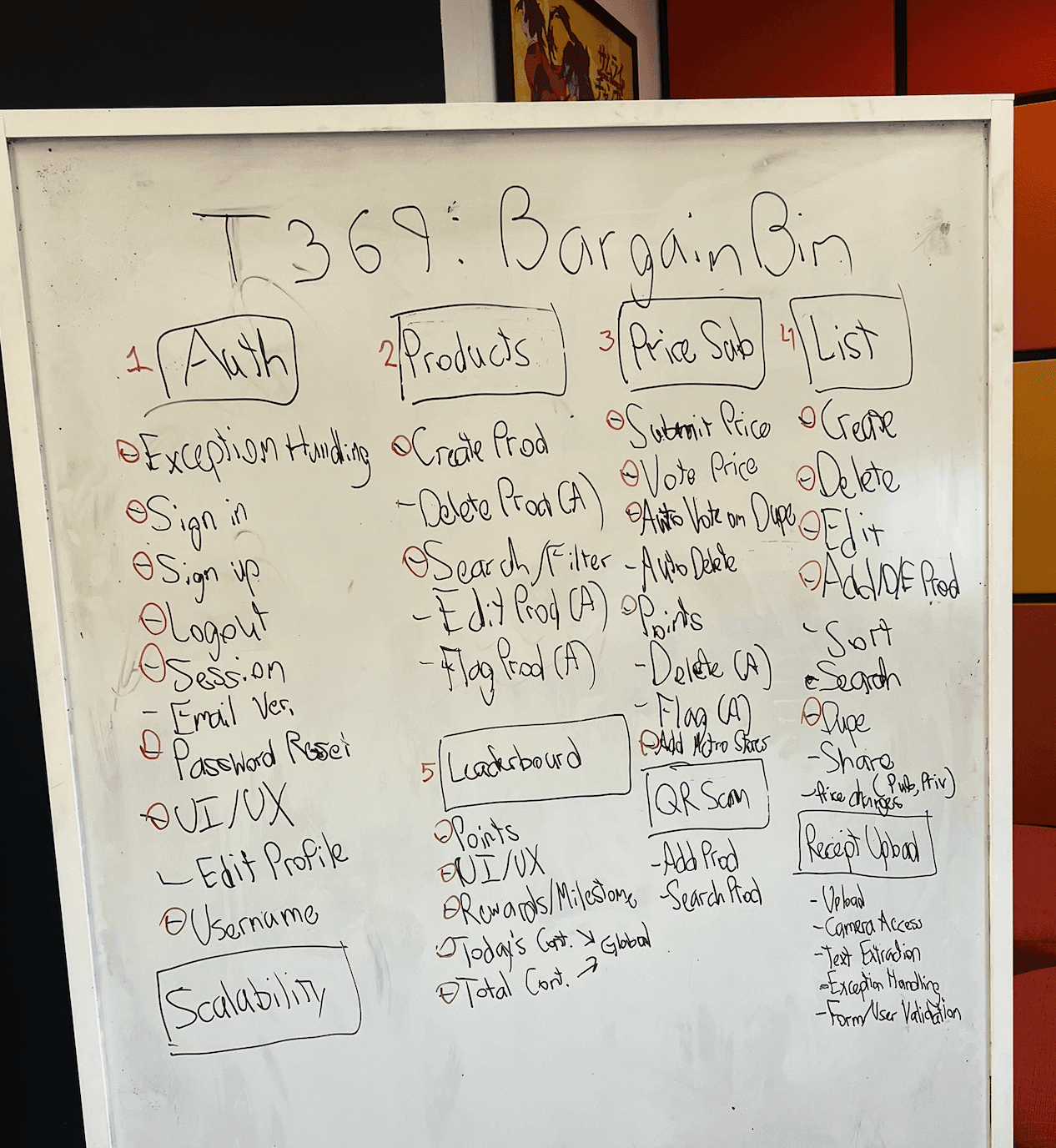
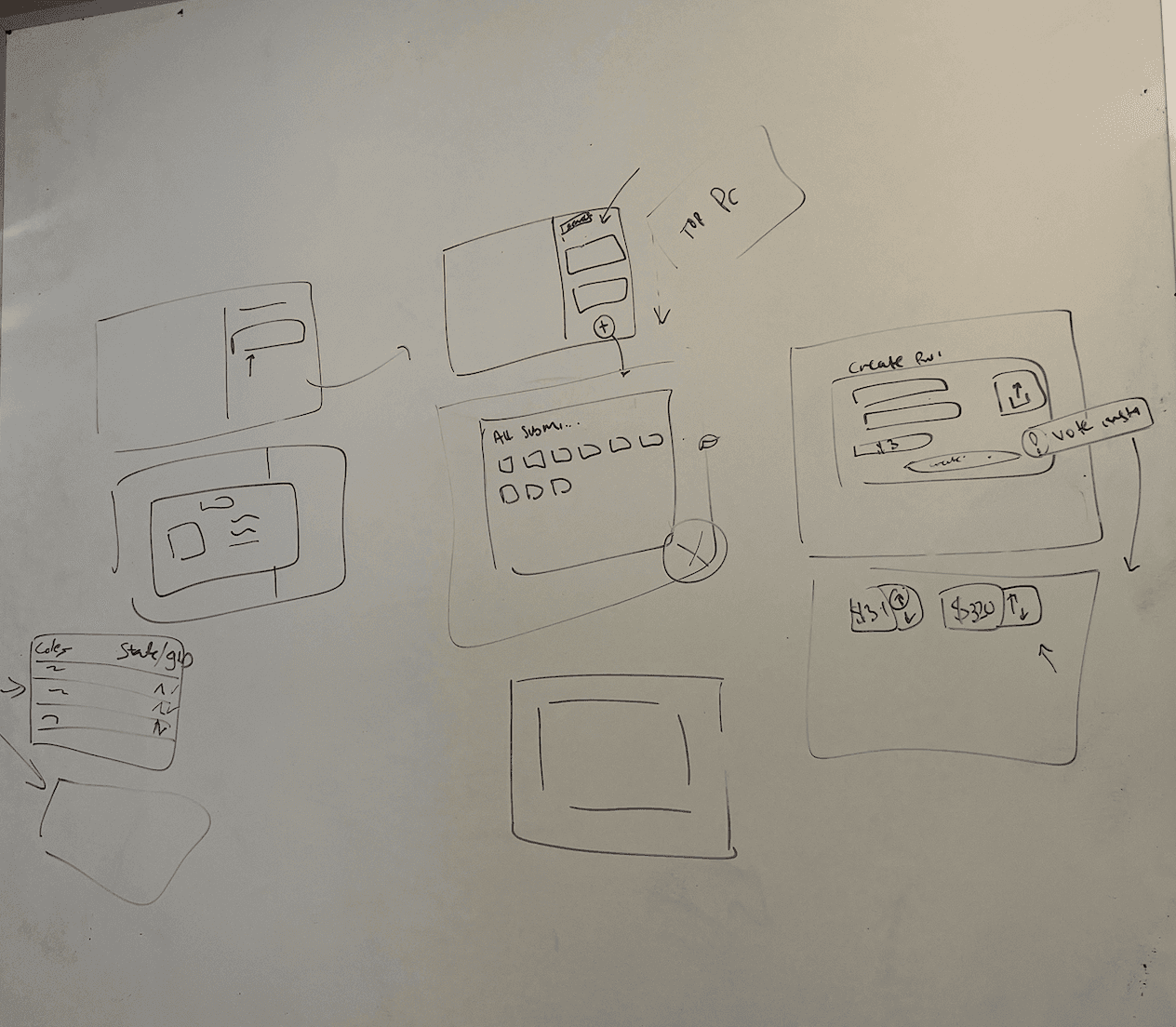
Initial Whiteboard Sketching of Features & Screens:
User Research & Similar Platforms
To ground the product in real user needs, we focused on understanding how people currently:
Compare grocery prices
Decide whether a price is “trustworthy”
Balance time spent searching against potential savings
Research Activities
Review of existing grocery comparison and deal platforms
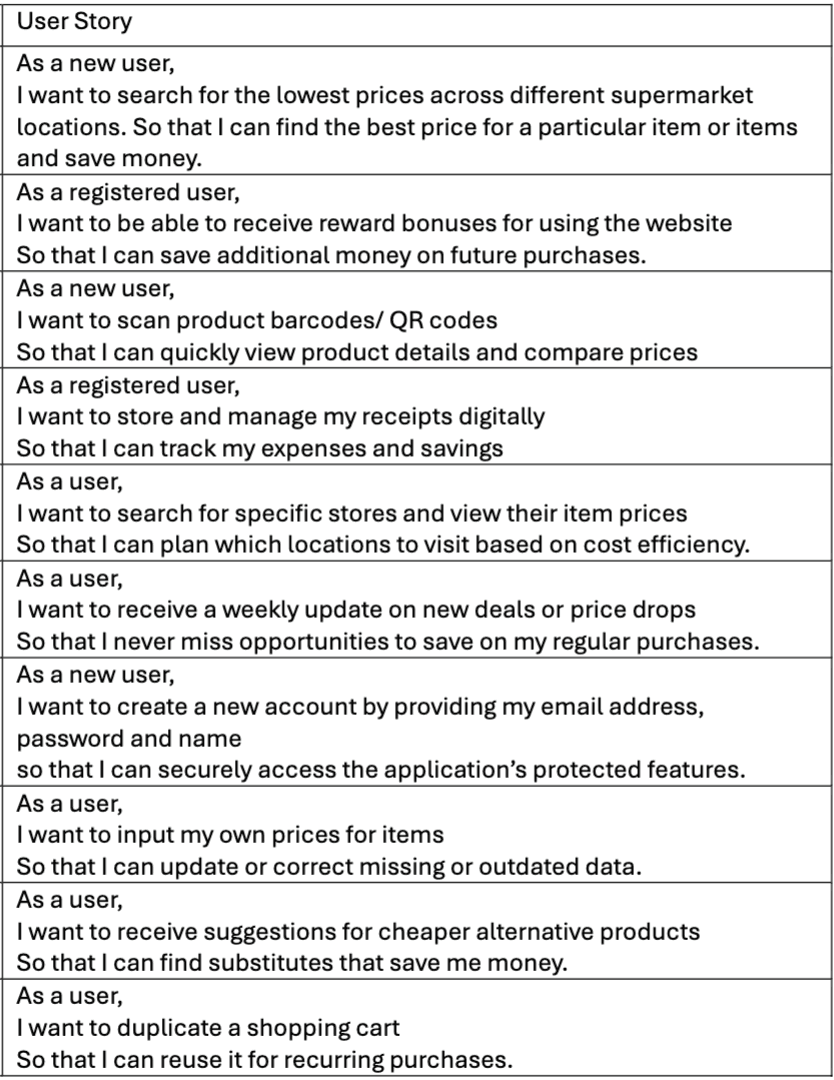
Analysis of user stories tied to saving money and reducing effort
Stakeholder input from the industry partner on long-term viability
Rather than aiming for exhaustive research, the focus was on identifying behavioral patterns that would influence product decisions, especially around trust and participation.
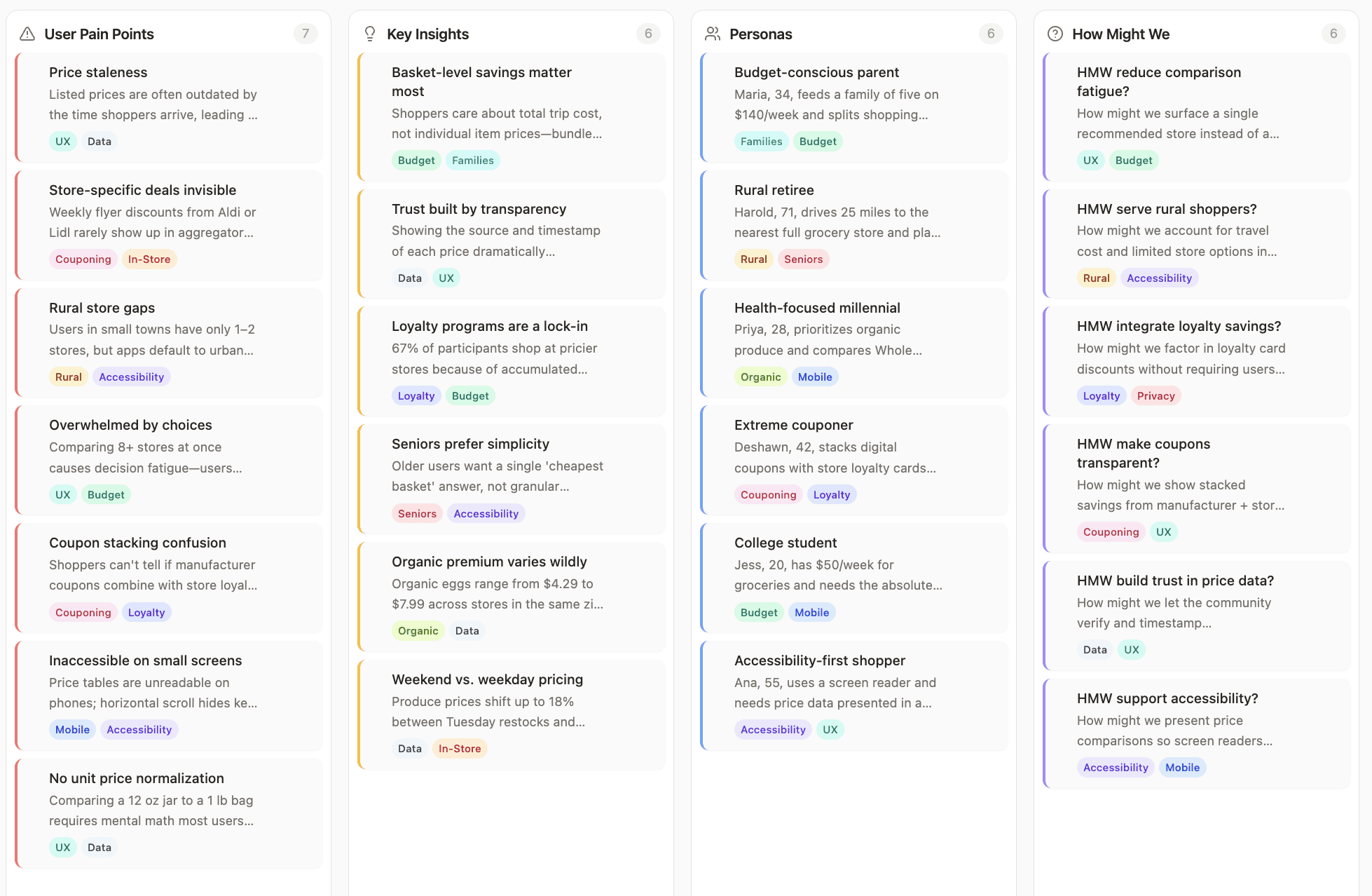
Research synthesis boards:
User Stories/Needs:
Design Strategy
Based on the insights and constraints, I defined three guiding principles:
Design for accuracy before scale
Trust had to be established before growth.Make contribution visible and rewarding
Users should see how their actions improve the platform.Reduce cognitive load at every step
Comparing and contributing prices should feel lightweight.
These principles guided prioritisation across features such as price voting, shopping lists, and rewards systems.
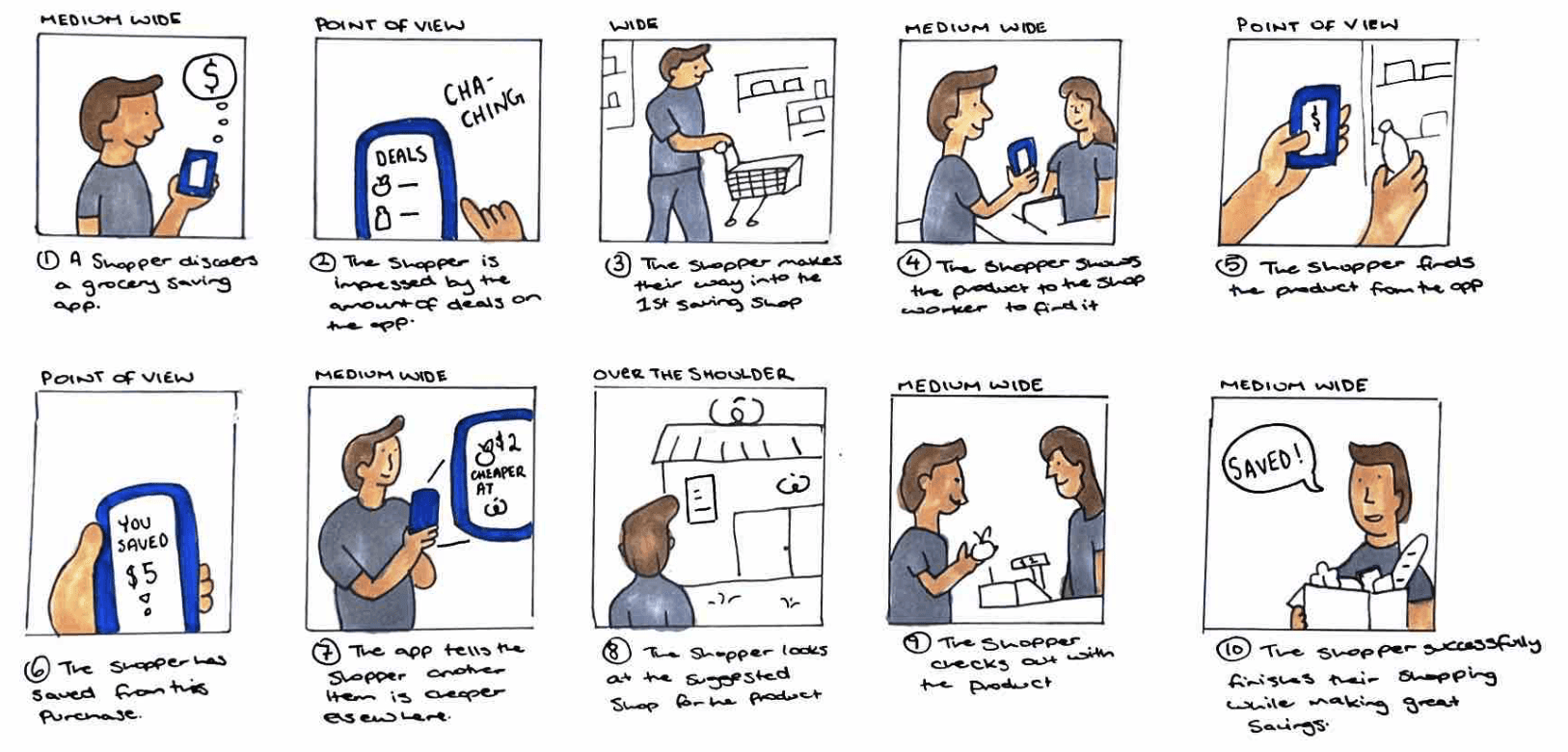
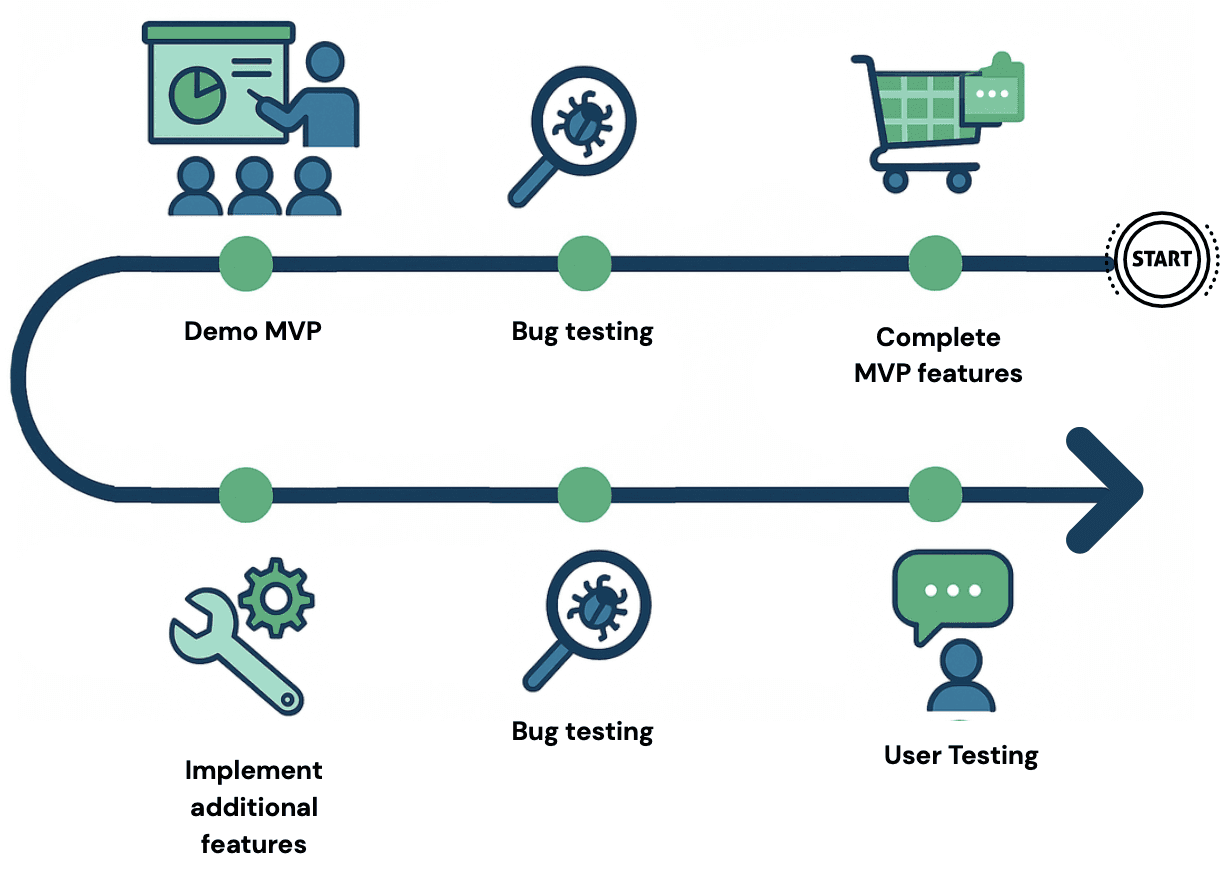
Early Concept Storyboards & Timeline:
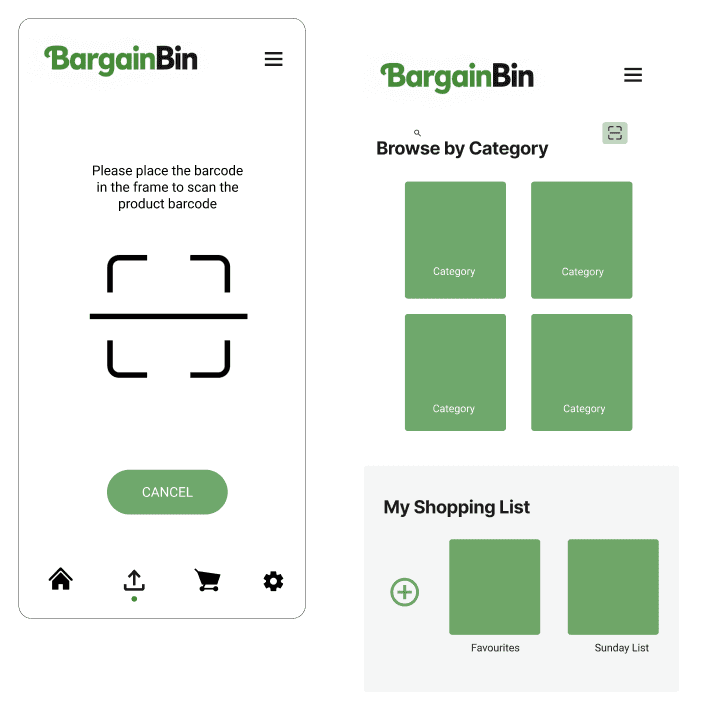
Design Process
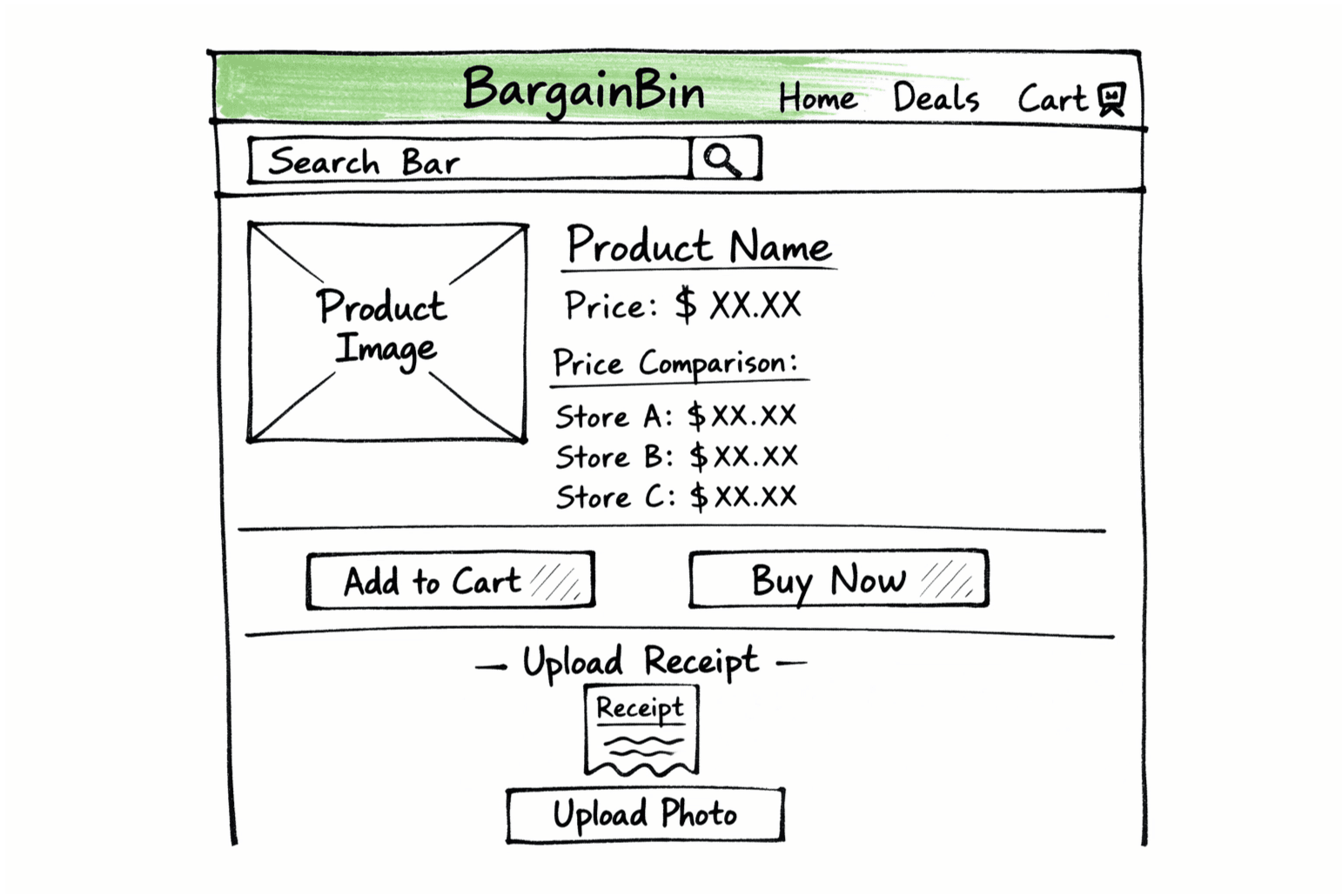
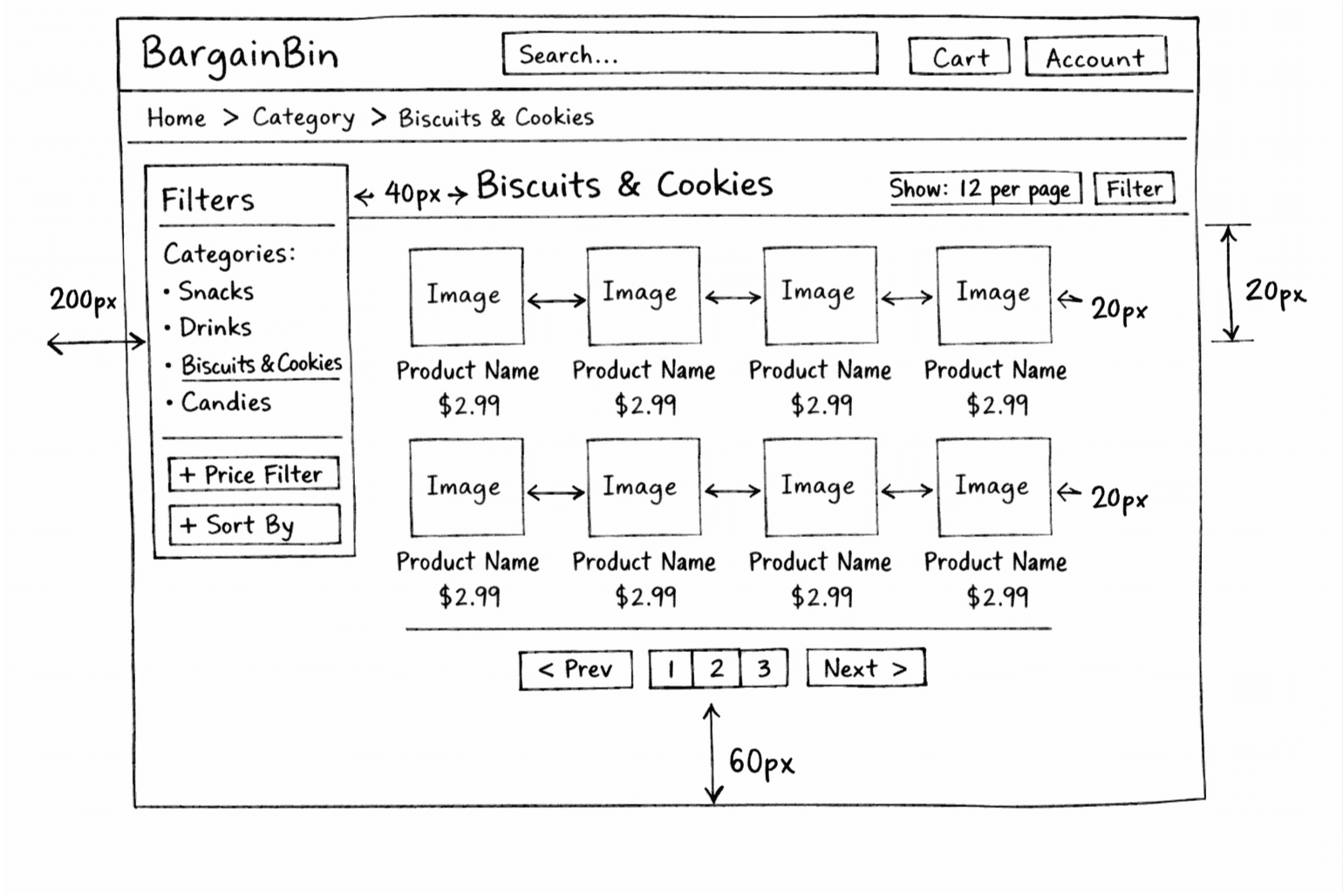
Initial wireframes and sketches explored:
Product discovery and search
Price submission flows
Shopping list creation and management
The goal was to map core user journeys before visual refinement.
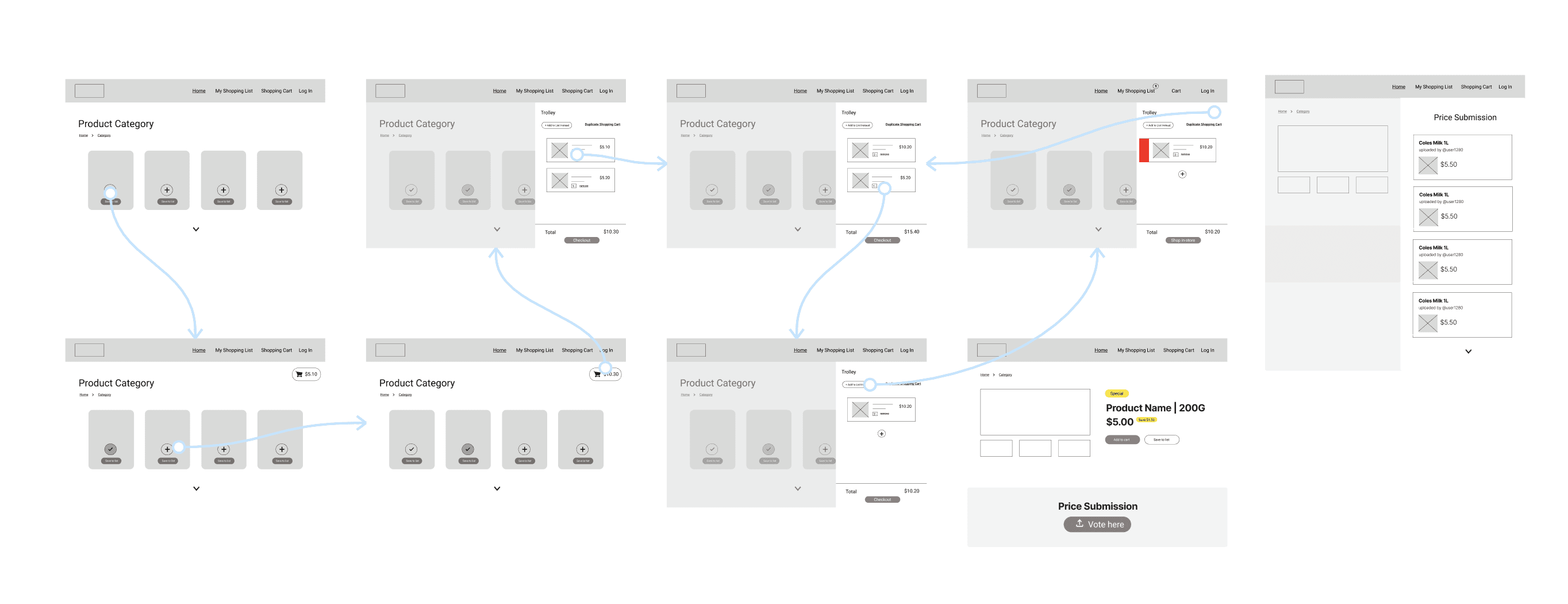
Low-Fidelity Wireframes:
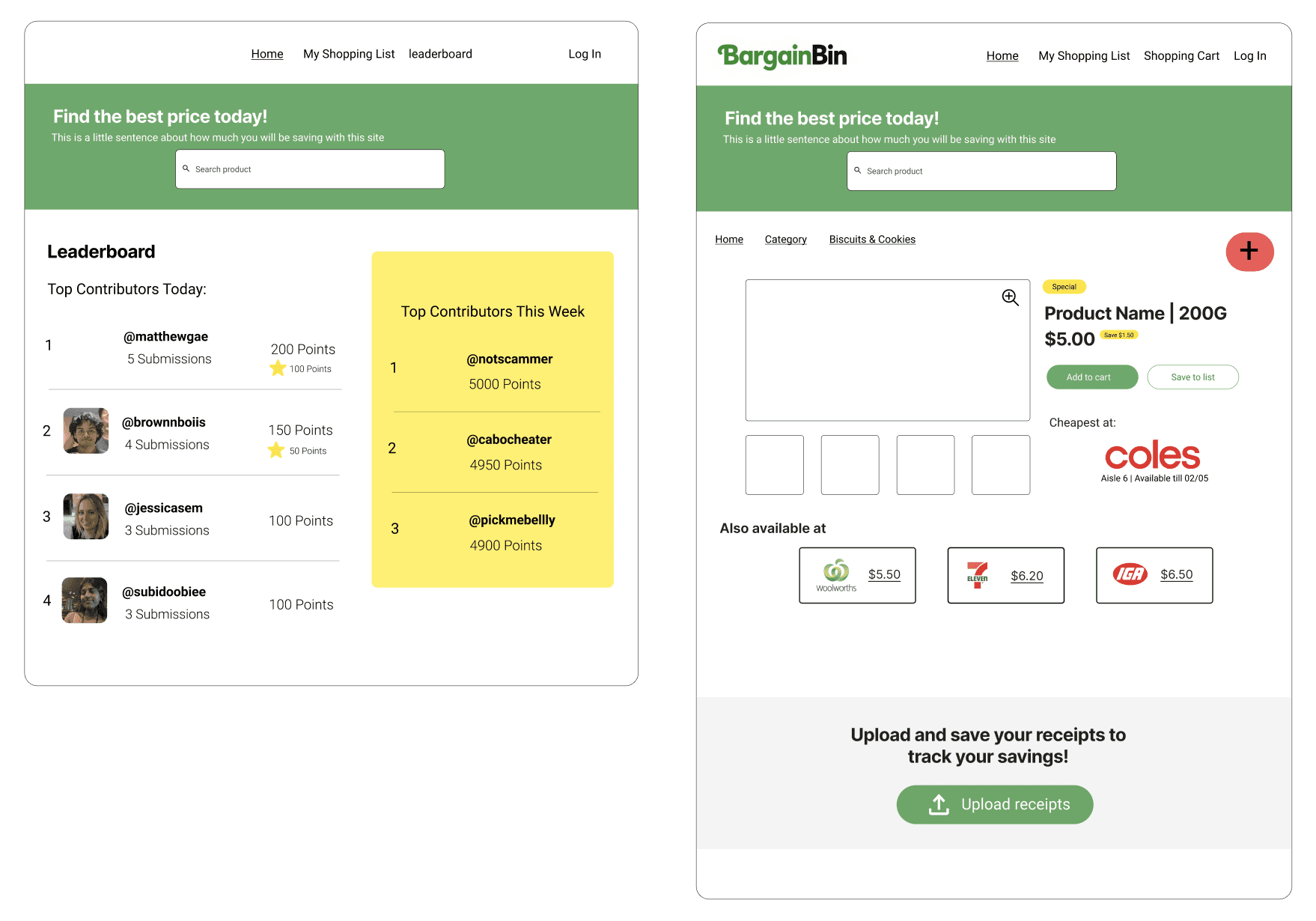
Medium- Fidelity Wireframes:
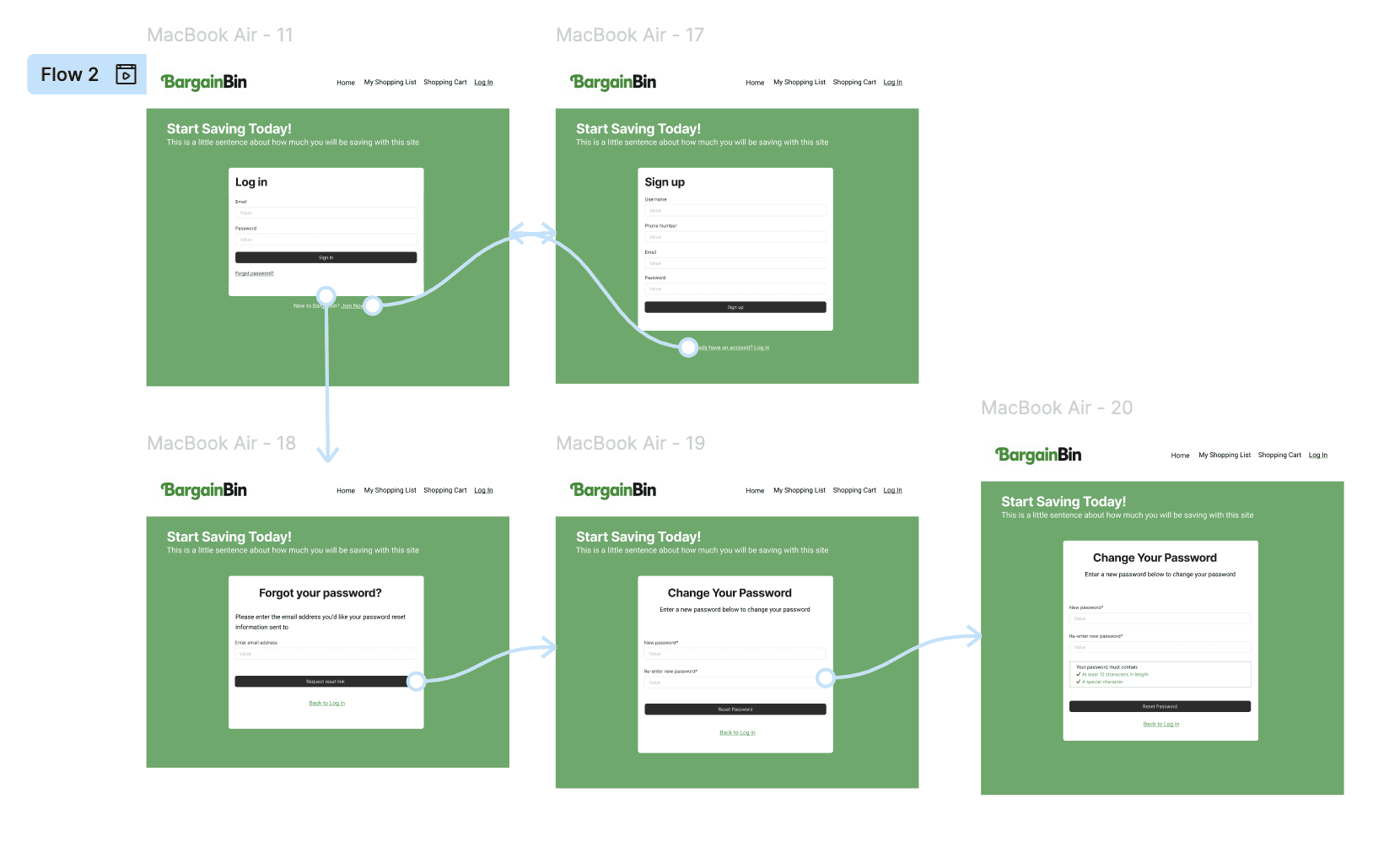
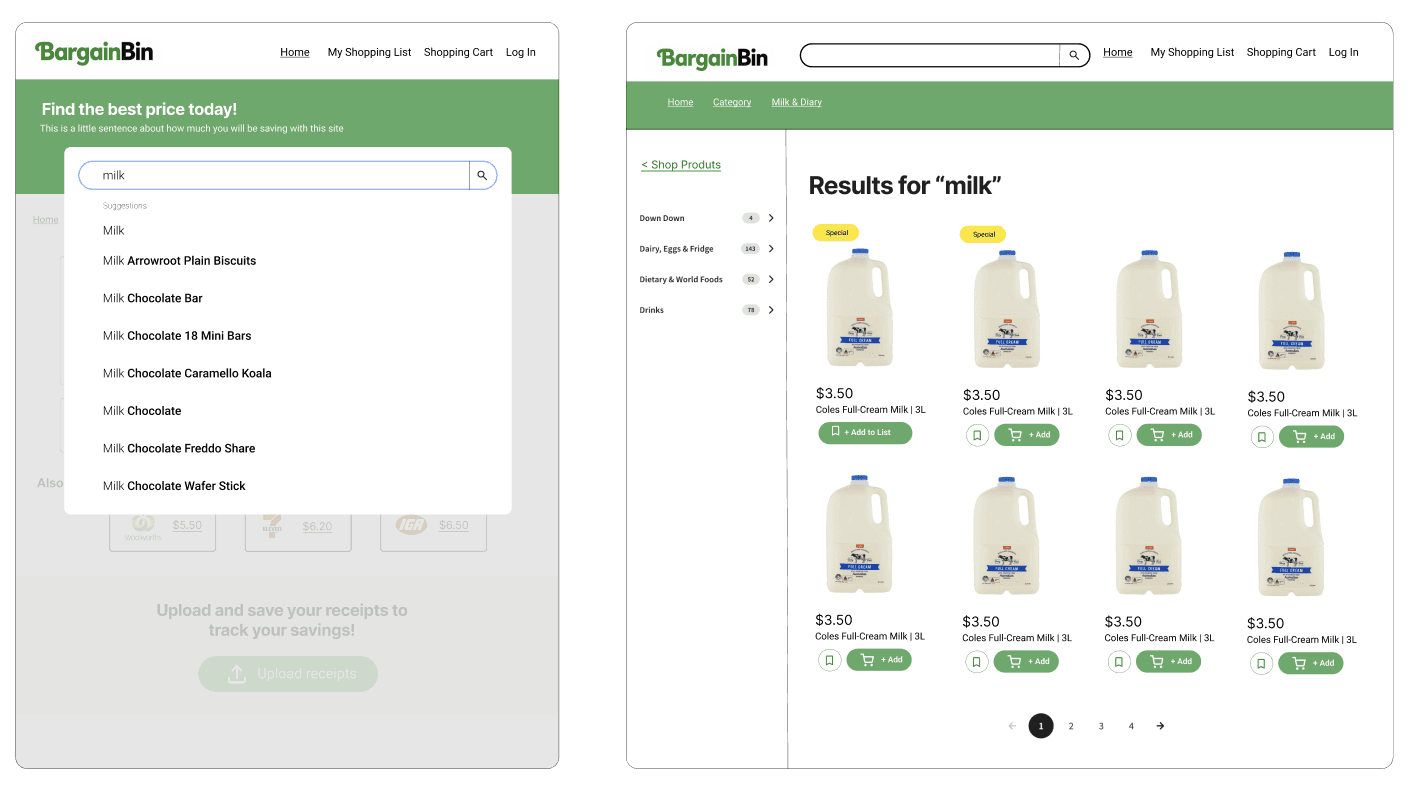
Iteration & Refinement
As development progressed, designs evolved to:
Reduce friction in price submission
Improve visibility of best prices by store
Introduce clearer hierarchy across product pages
Feedback from implementation and testing informed layout adjustments and interaction changes.
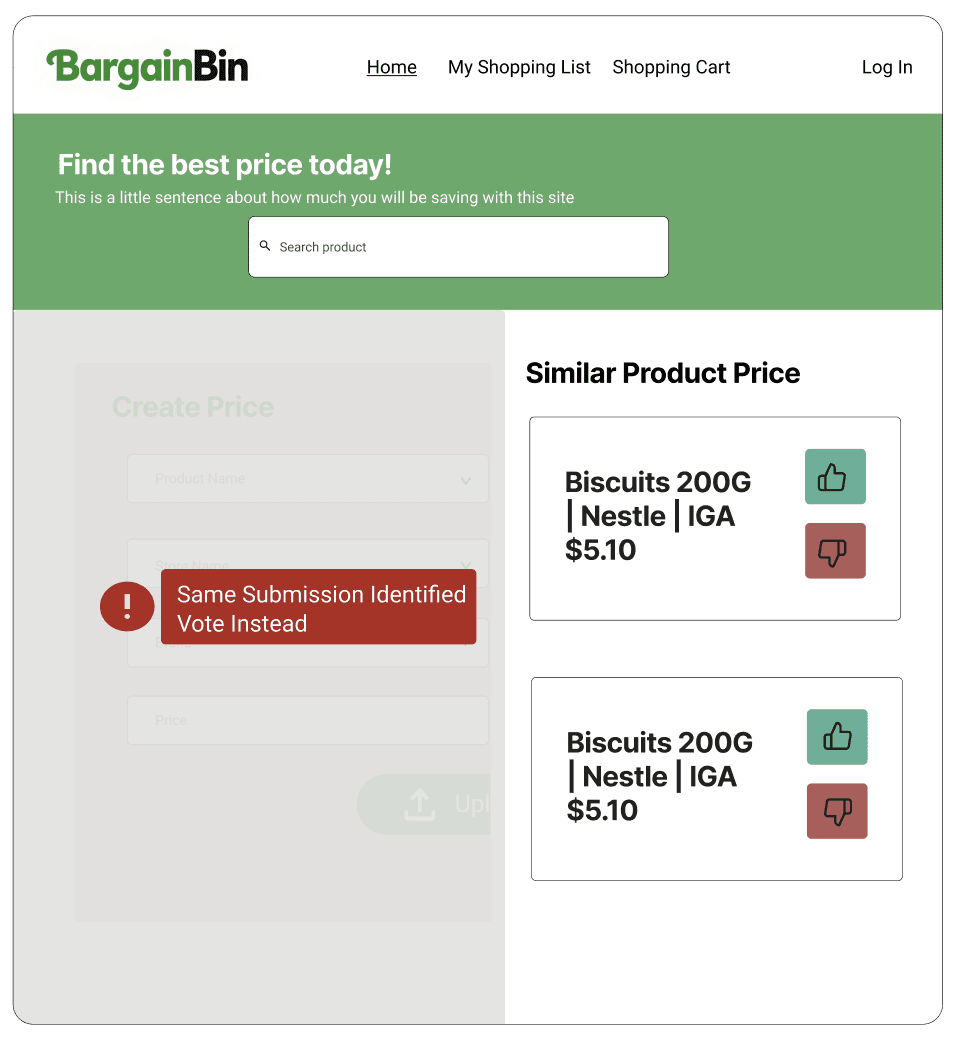
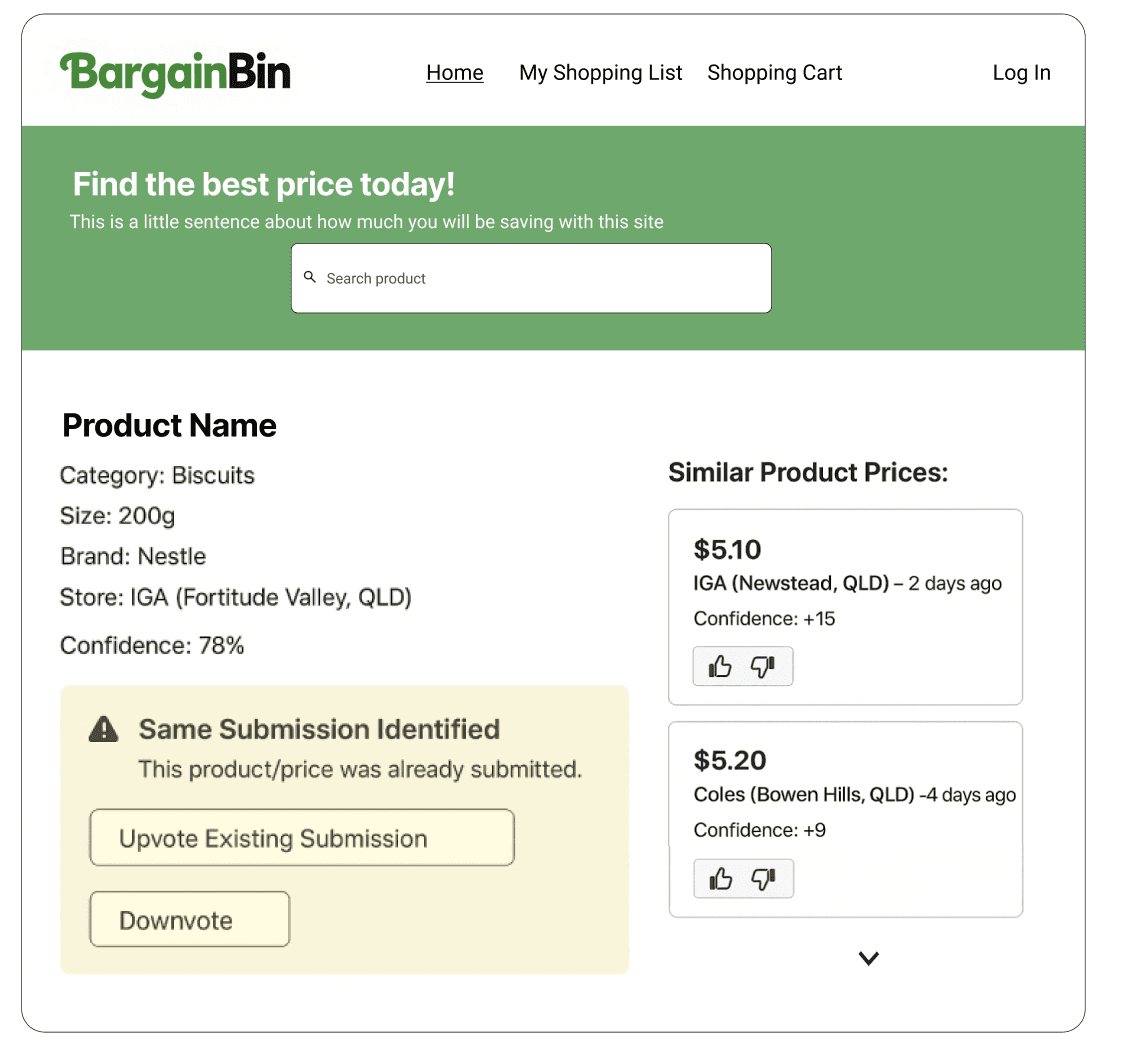
Different Variations of same pages
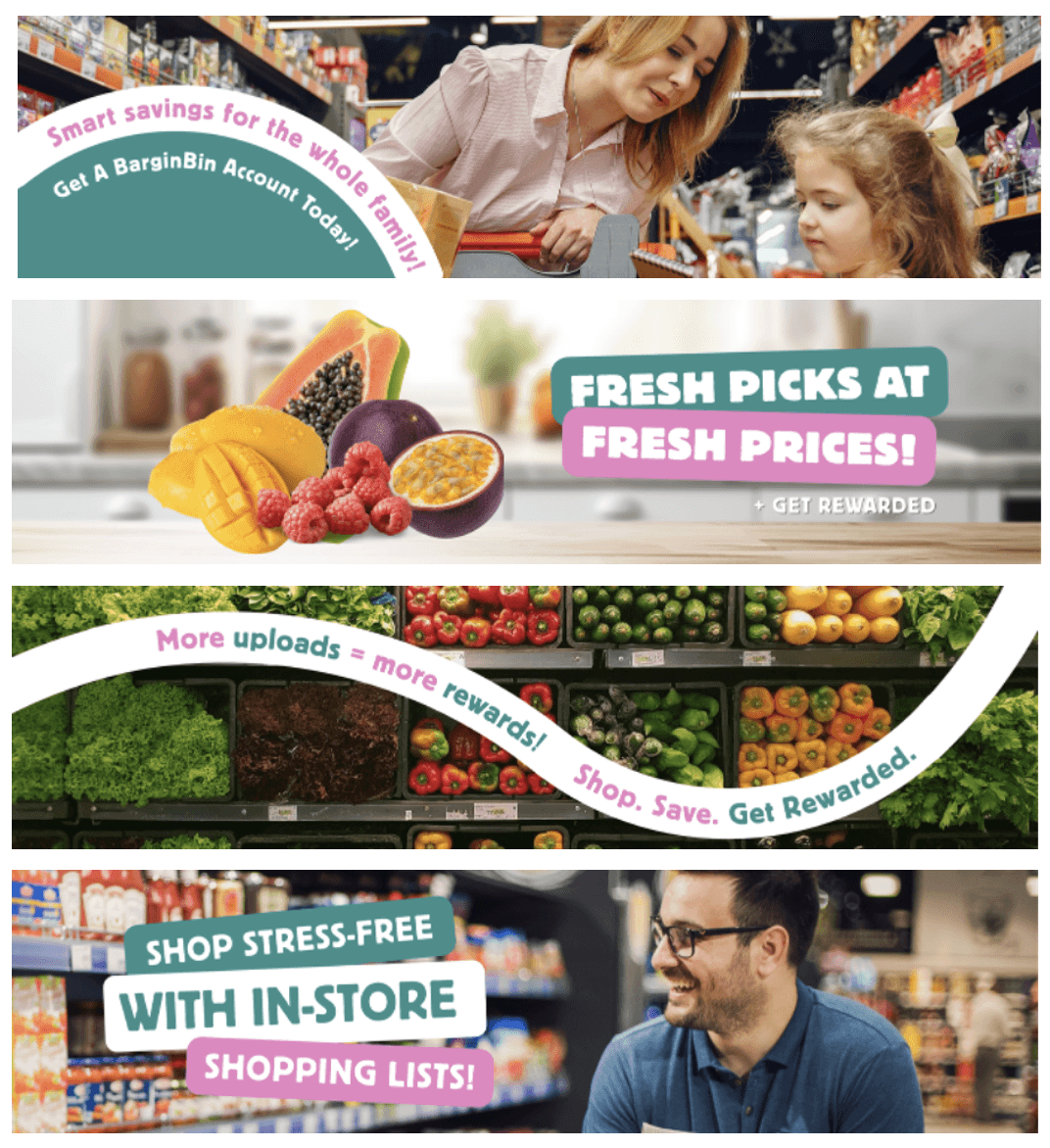
High-Fidelity Logos & Graphics
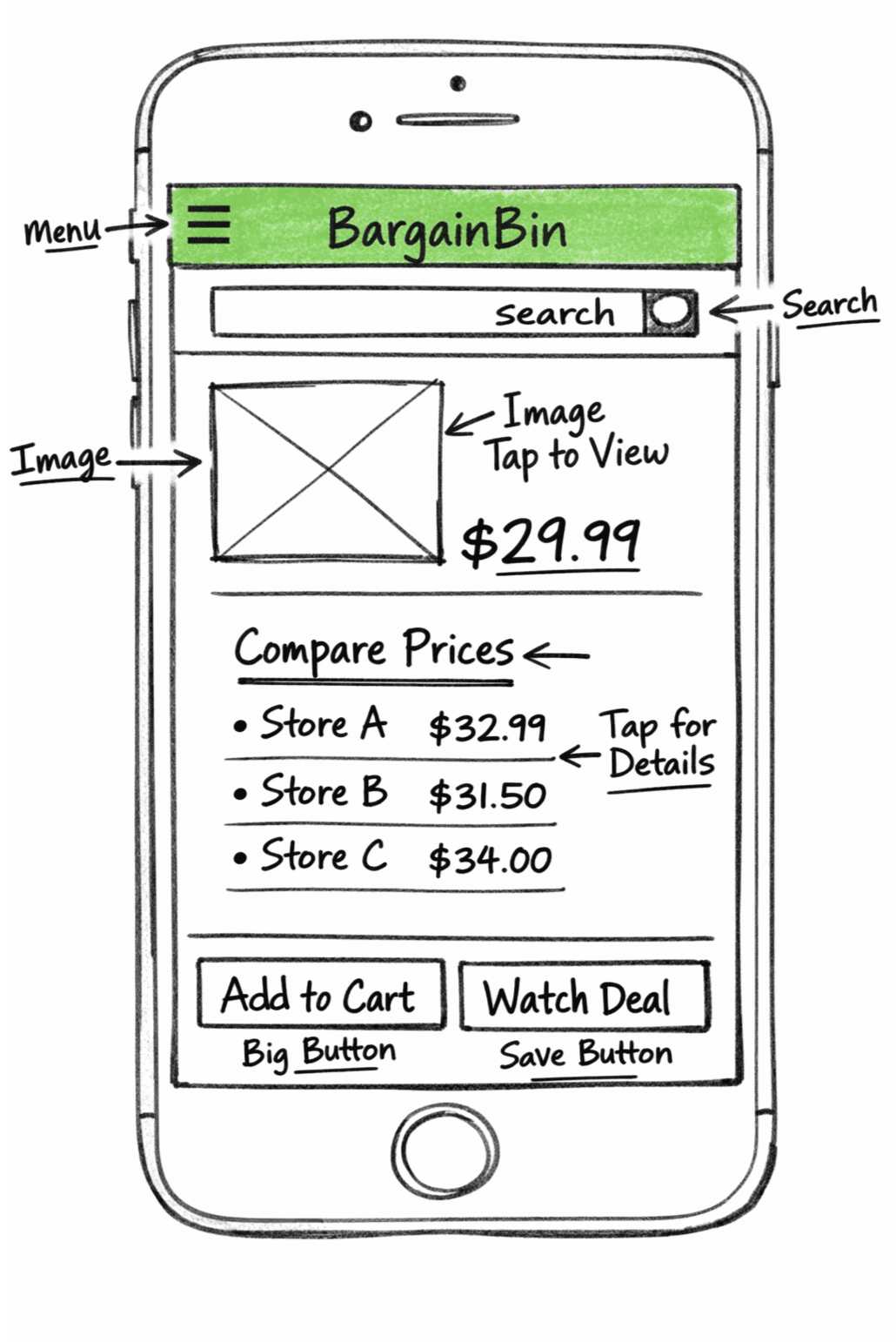
Hand-drawn sketches:
Usability Testing
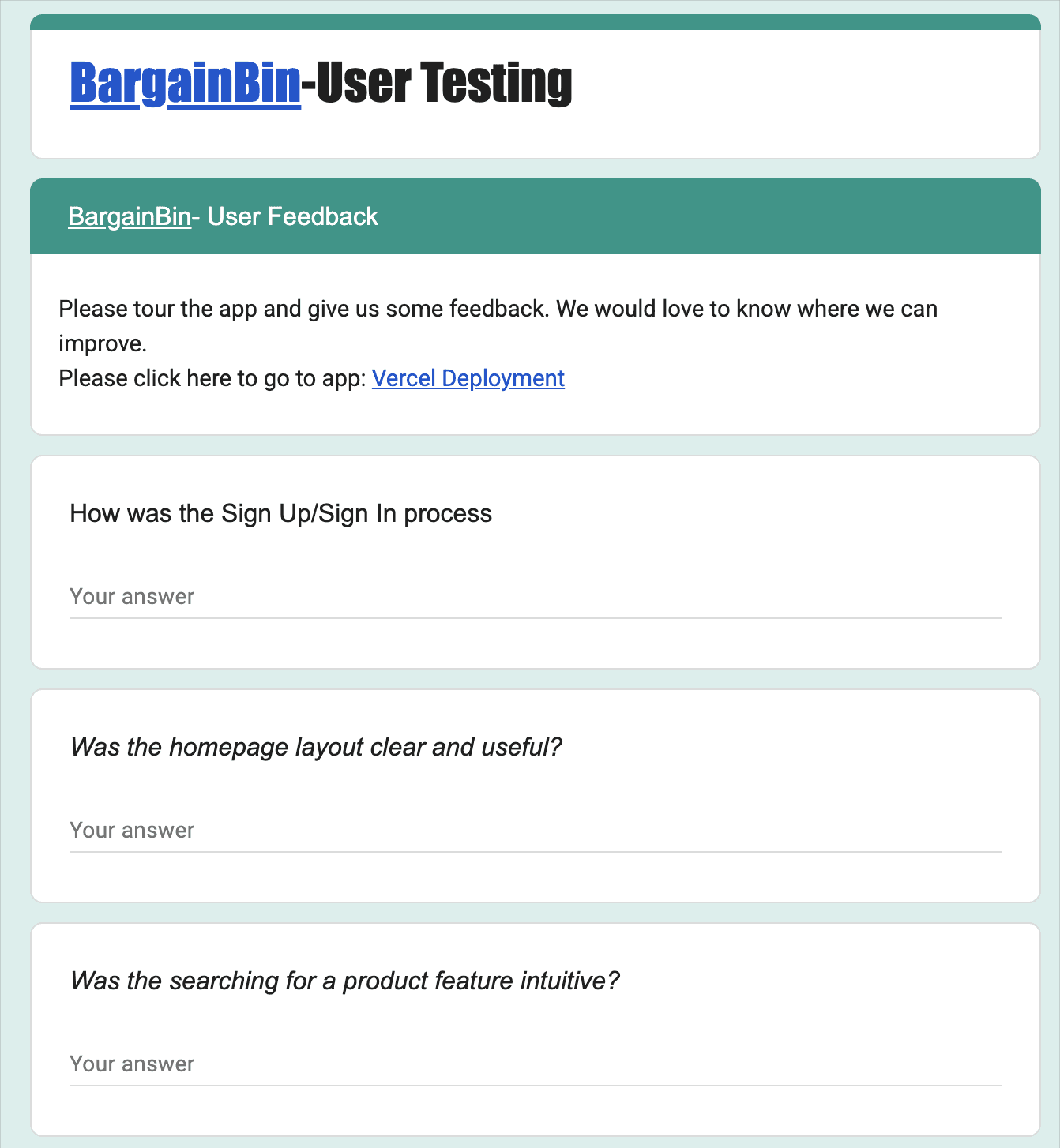
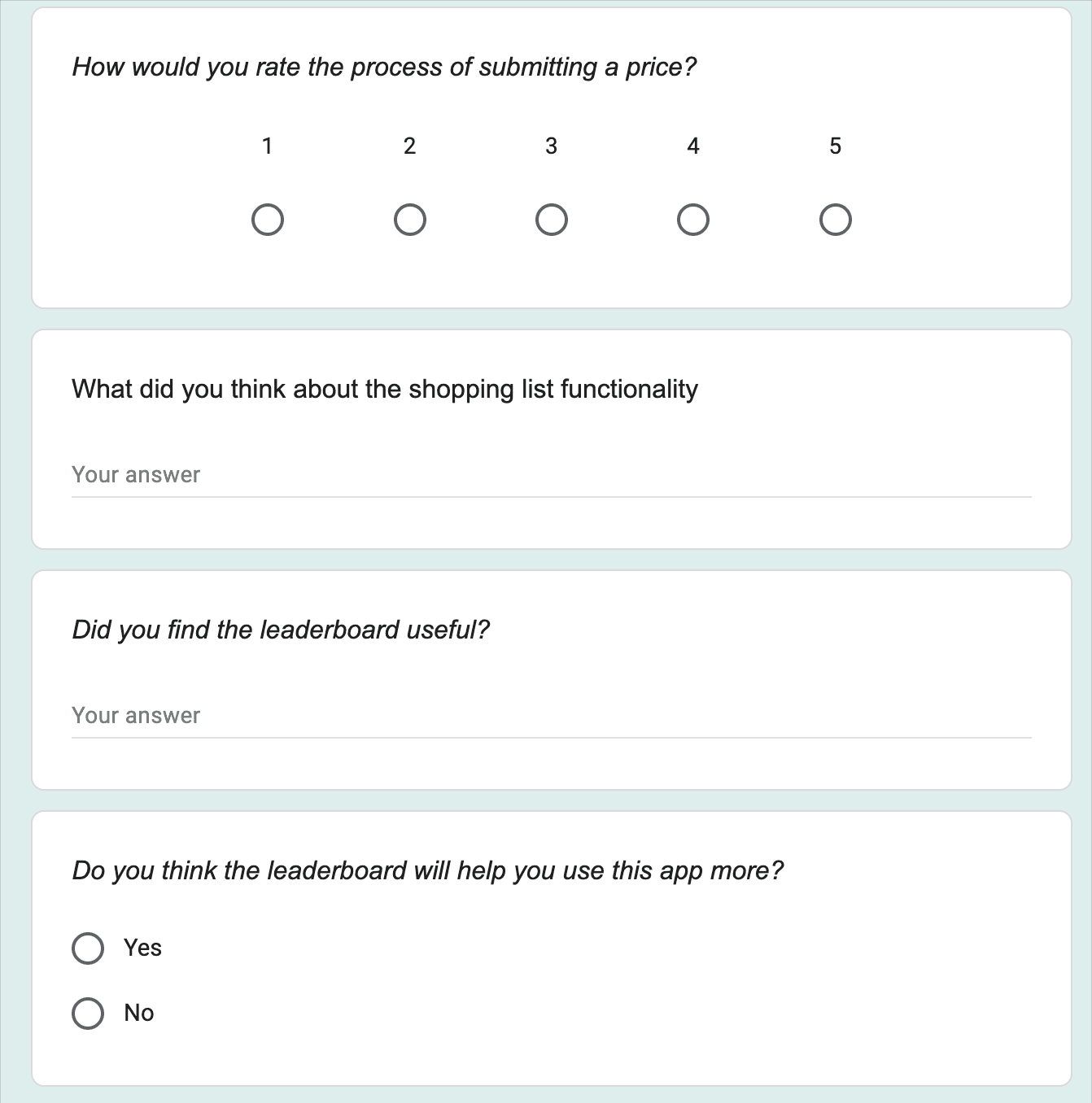
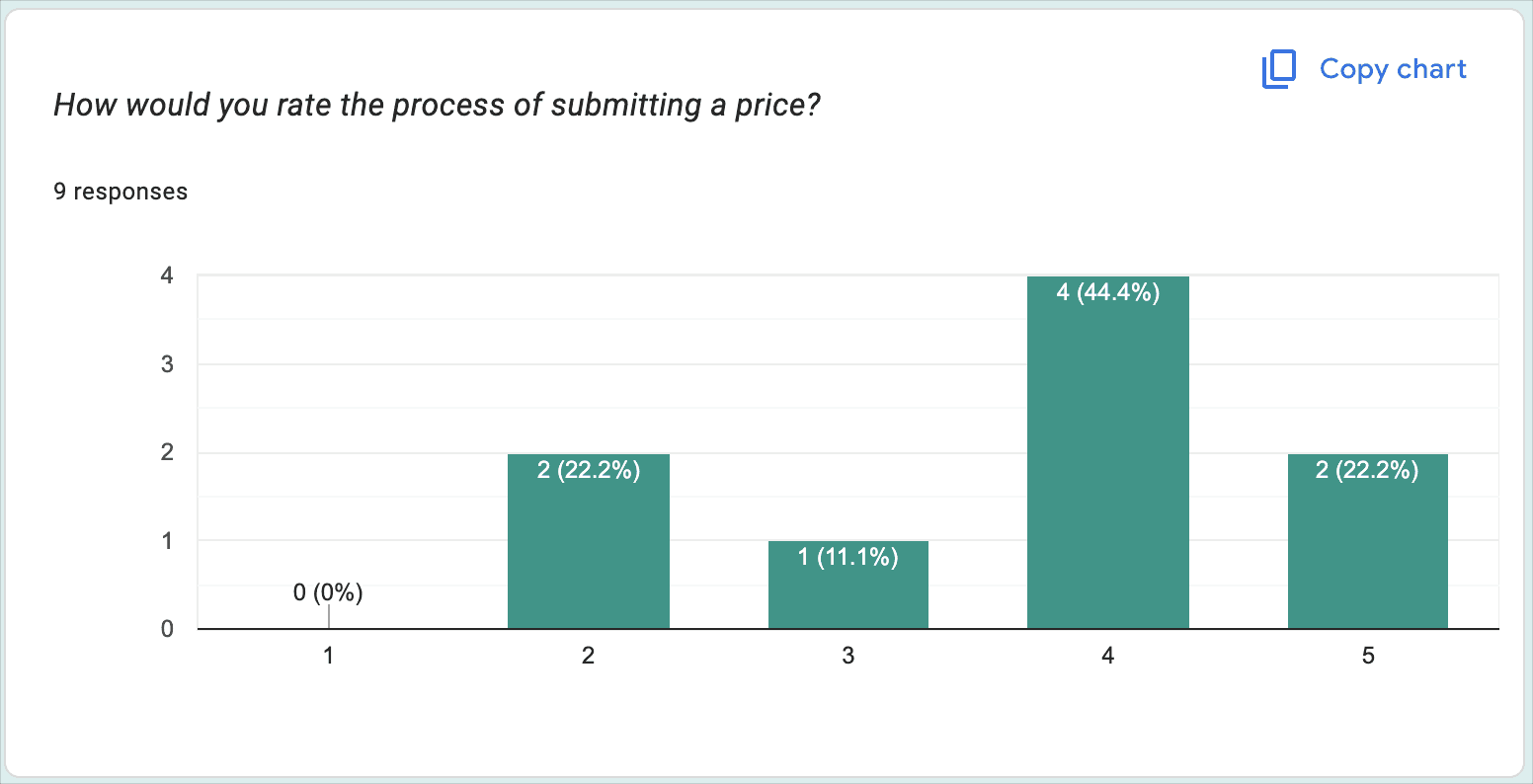
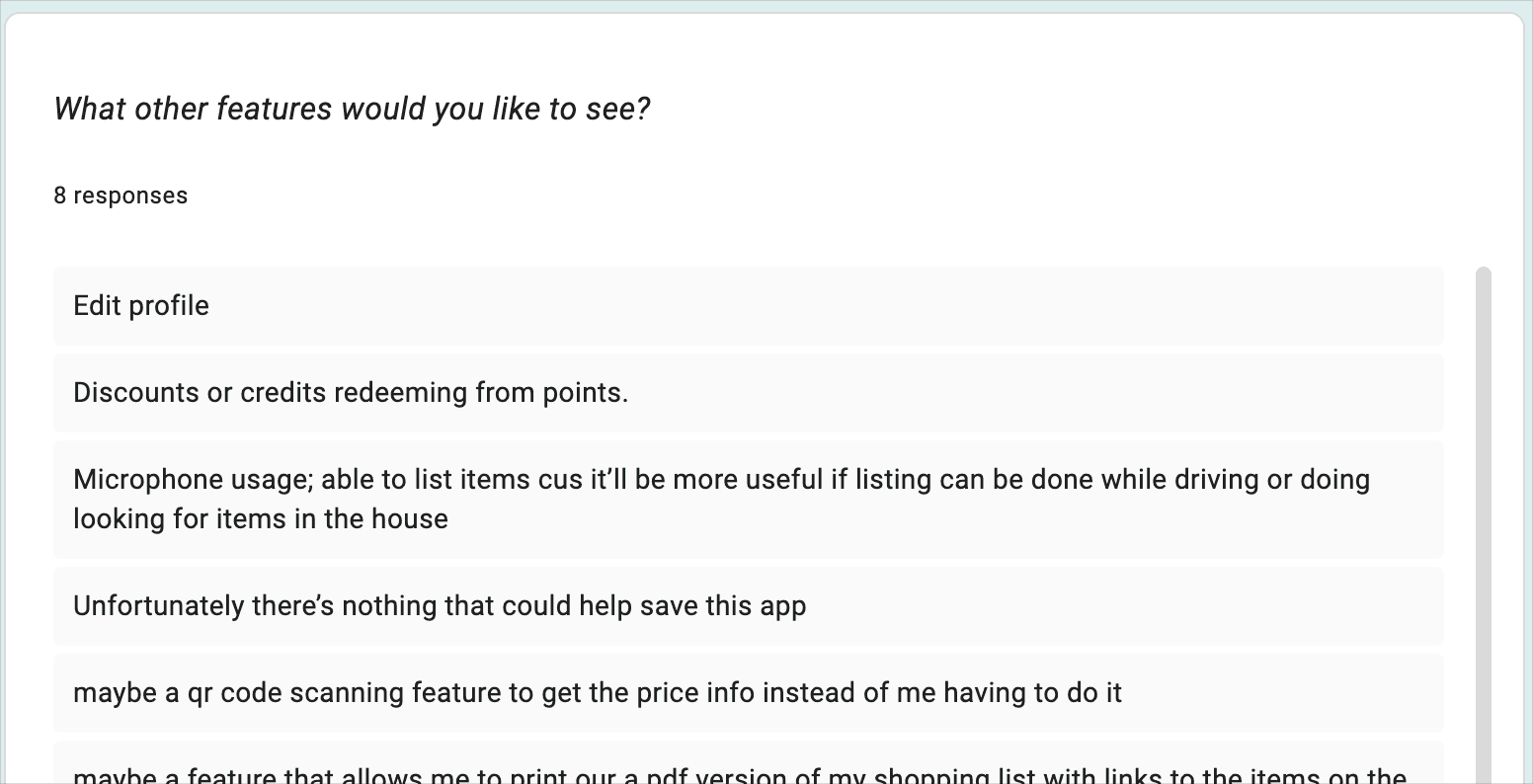
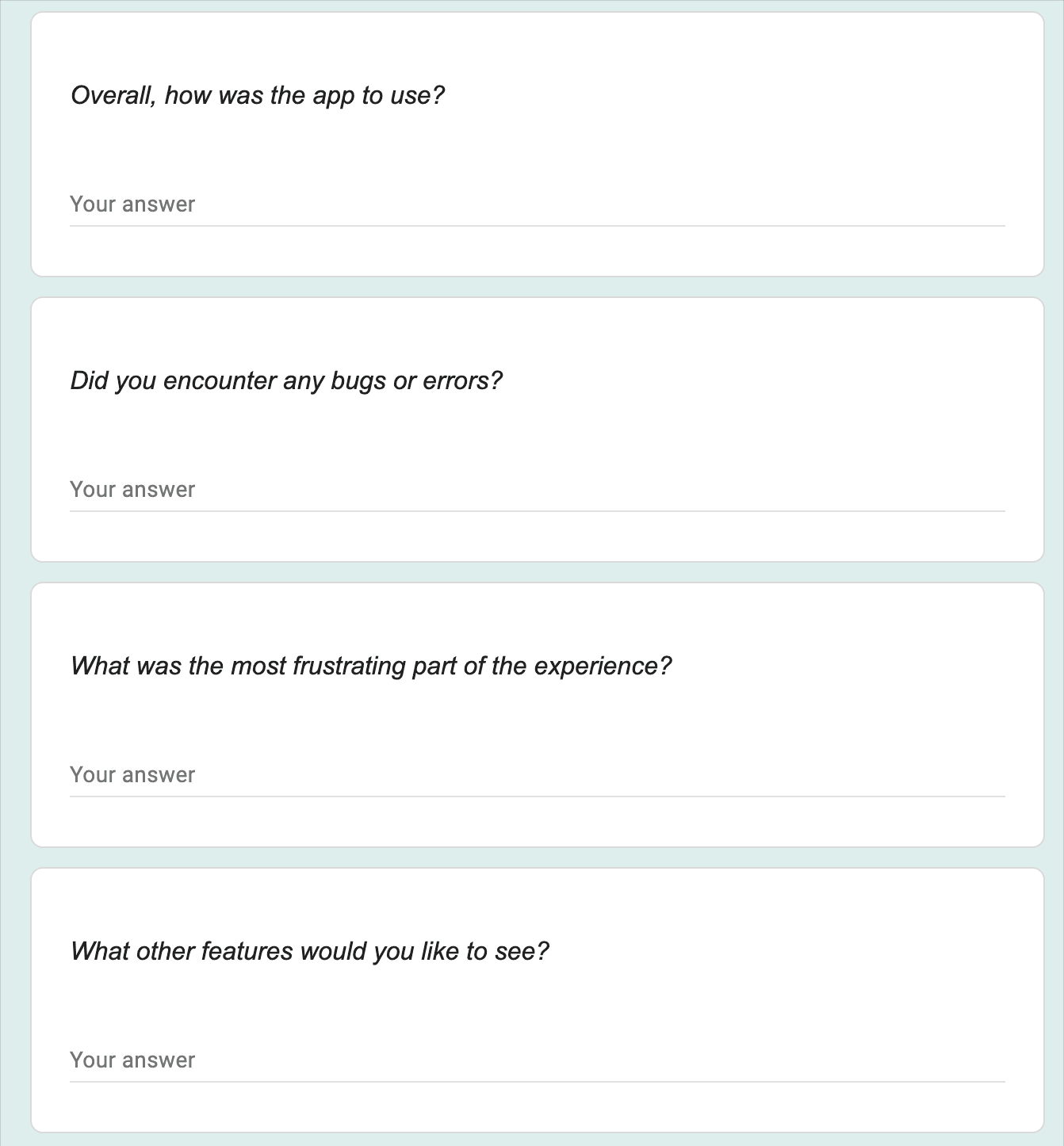
Once the high-fidelity designs were completed, I designed and facilitated a structured user testing process using a google form survey that included test cases and feedback ratings. We invited participants to interact with the BargainBin platform and observed their navigation patterns, ease of use, and overall impressions.
After the user-testing sessions, all the participant responses were complied into a detailed table to identify recurring issues, usability challenges, and feedback. This allowed us to clearly visualise trends, highlighting areas needing refinement, and begin considering practical improvements. During the user testing, some participants misunderstood the purpose of the points system. I needed to adjust the survey and clarify the design so users could easily understand how it functioned. I then refined the test case questions and added visual cues into the design to explain the feature. In the surveys done after, users demonstrated a clearer understanding of how the points system worked. This improved my ability to translate the gamified concepts into intuitive and visually guided interactions.
Usability Survey with Excersises & Screen-Recordings
Survey Results:
Validation & Outcomes
The platform underwent acceptance testing and user feedback collection to evaluate usability and reliability.
Outcomes
Core features were successfully implemented and tested
Users could compare prices, submit data, and manage shopping lists
Voting and rewards increased confidence in submitted prices
Feedback directly informed bug fixes and refinements
The final application received praise from the client for exceptional work, confirming alignment with the original vision and requirements
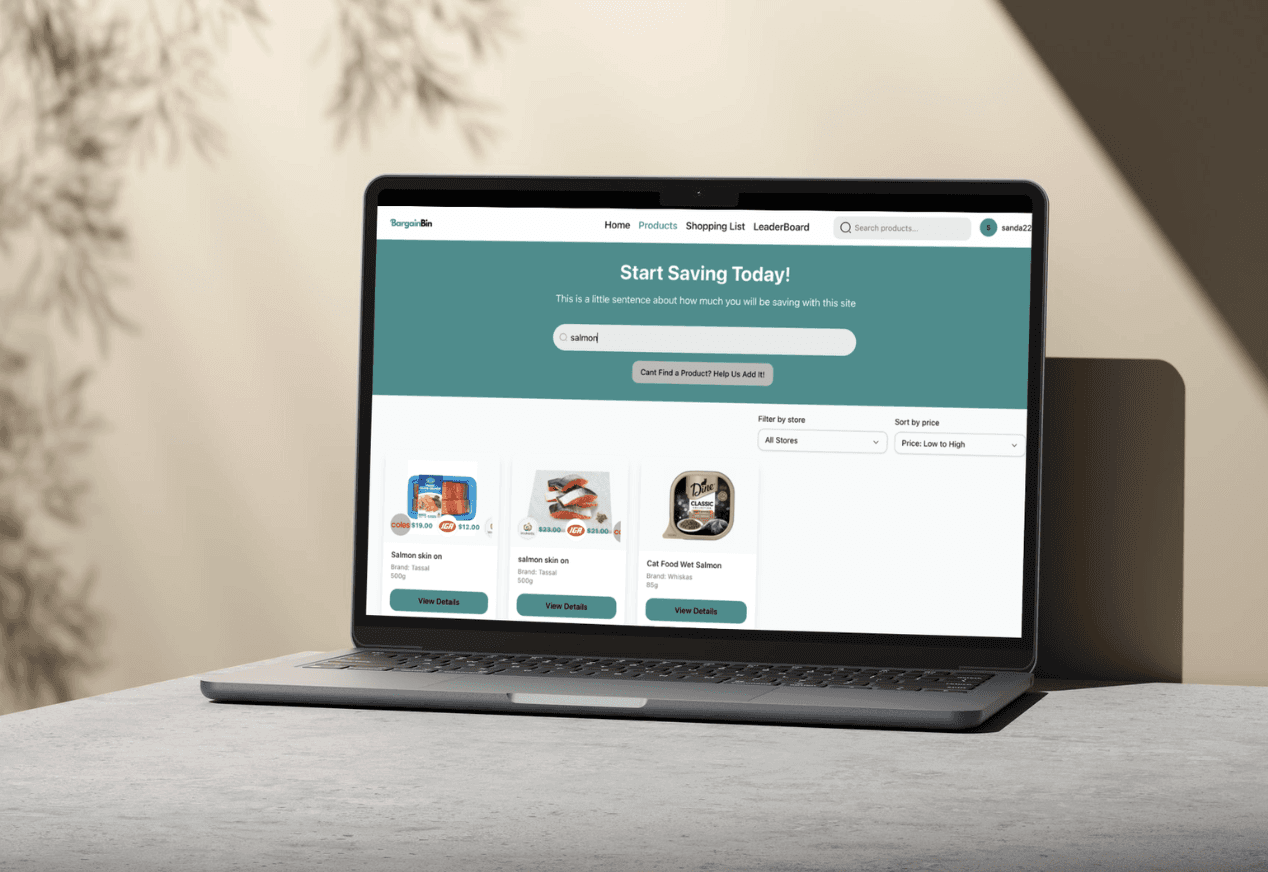
Final Product with High-Fidelity Design:
Learnings & Next Steps
Key Learnings
Trust is foundational for community-driven products
Constraints can sharpen product focus
Designing systems matters as much as designing screens
Next Steps
Integrate receipt uploads to accelerate data contribution
Explore APIs to supplement crowdsourced pricing
Expand moderation and trust signals as the platform scales
View Completed Site