Context:
FlagVision was developed to explore how augmented reality could enhance elite sports training ahead of the 2028 Olympics.
Problem:
Flag football athletes often train in isolation due to geographic, time, and resource constraints.
Solution:
An AR training system that overlays routes, defensive schemes, and real-time feedback directly onto the field.
Augmented Reality presents an opportunity to bridge the gap between individual practice and team-based training. Unlike video or mental rehearsal, AR allows athletes to move in real space while receiving visual and audio guidance that adapts to their position and actions.
Given the speculative nature of the project, the design focused on:
Helping players visualise plays in real space
Supporting both experienced and beginner athletes
Delivering feedback without overwhelming the user
Maintaining physical intensity during training
Helping players visualise plays in real space
Supporting both experienced and beginner athletes
Delivering feedback without overwhelming the user
Working on FlagVision strengthened my ability to design within speculative and technically constrained contexts while still maintaining clarity of intent. Because the project explored augmented reality in a sports training environment, a key challenge was balancing ambition with feasibility- clearly communicating how the system would function without being able to fully implement the technology. This pushed me to think more carefully about interaction logic, spatial information hierarchy, and how athletes would engage with the system while in motion, rather than relying on interface-heavy solutions.
The project also deepened my understanding of designing for complex, real-world behaviours. Through user testing with players at different skill levels, it became clear that adaptability and progressive disclosure were essential to prevent cognitive overload during active training. FlagVision reinforced the importance of designing systems that support users in context — prioritising clarity, flexibility, and physical flow over visual density. Overall, this project helped me grow as a designer who can articulate future-facing concepts thoughtfully, while remaining grounded in user needs and practical constraints.
PROJECT SNAPSHOT
DESIGN PROCESS
REFLECTION:
Eye-Jack Design:
Why Augmented Reality?
Design Goals
Prototyping:
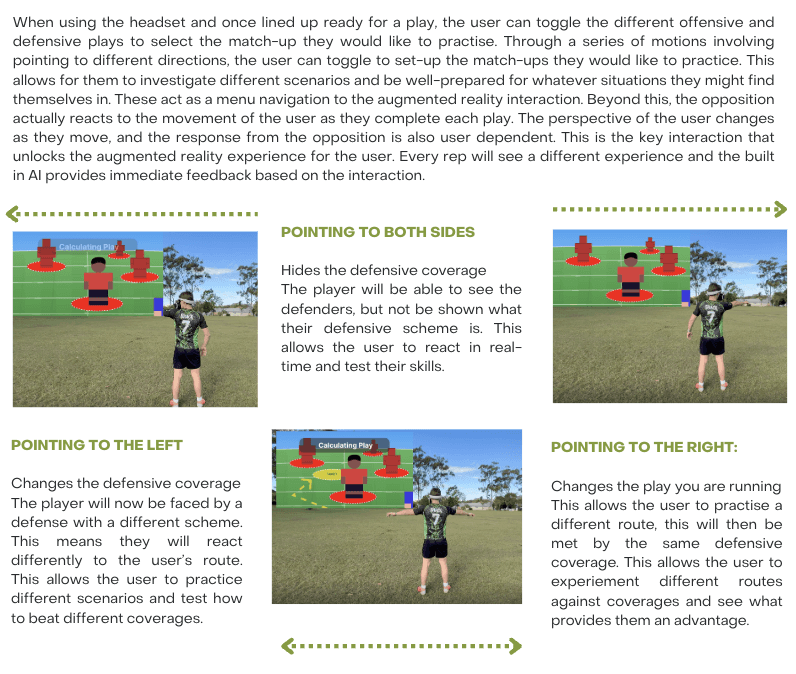
Key AR Interactions:
User Testing:
Interaction Design
Augmented Reality
Systems Thinking
User-Centred Design
Concept Prototyping
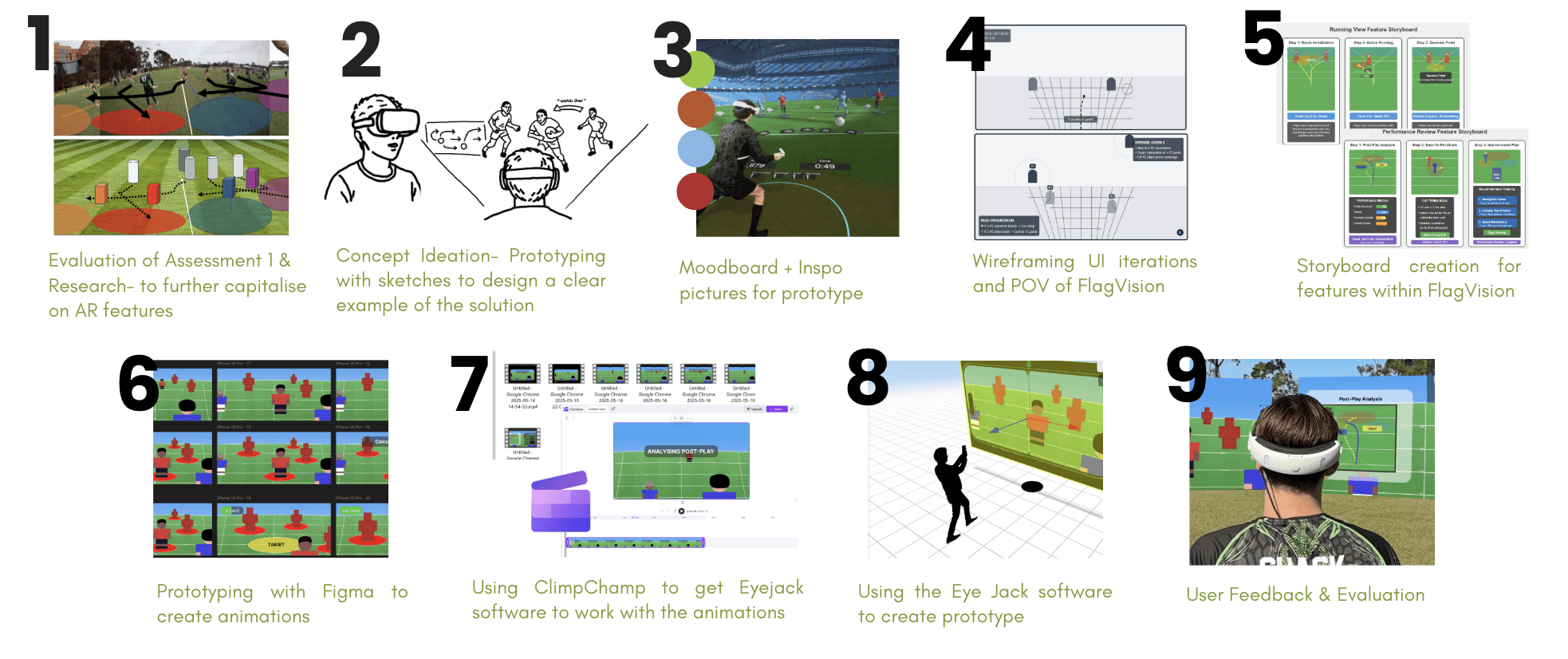
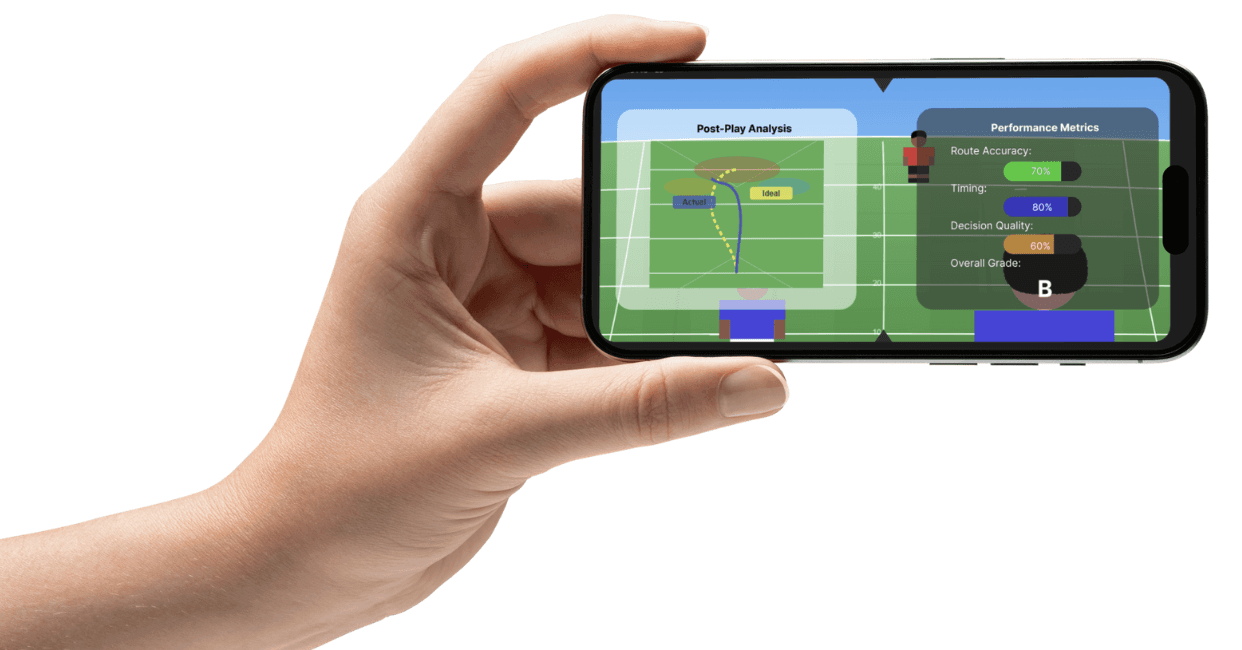
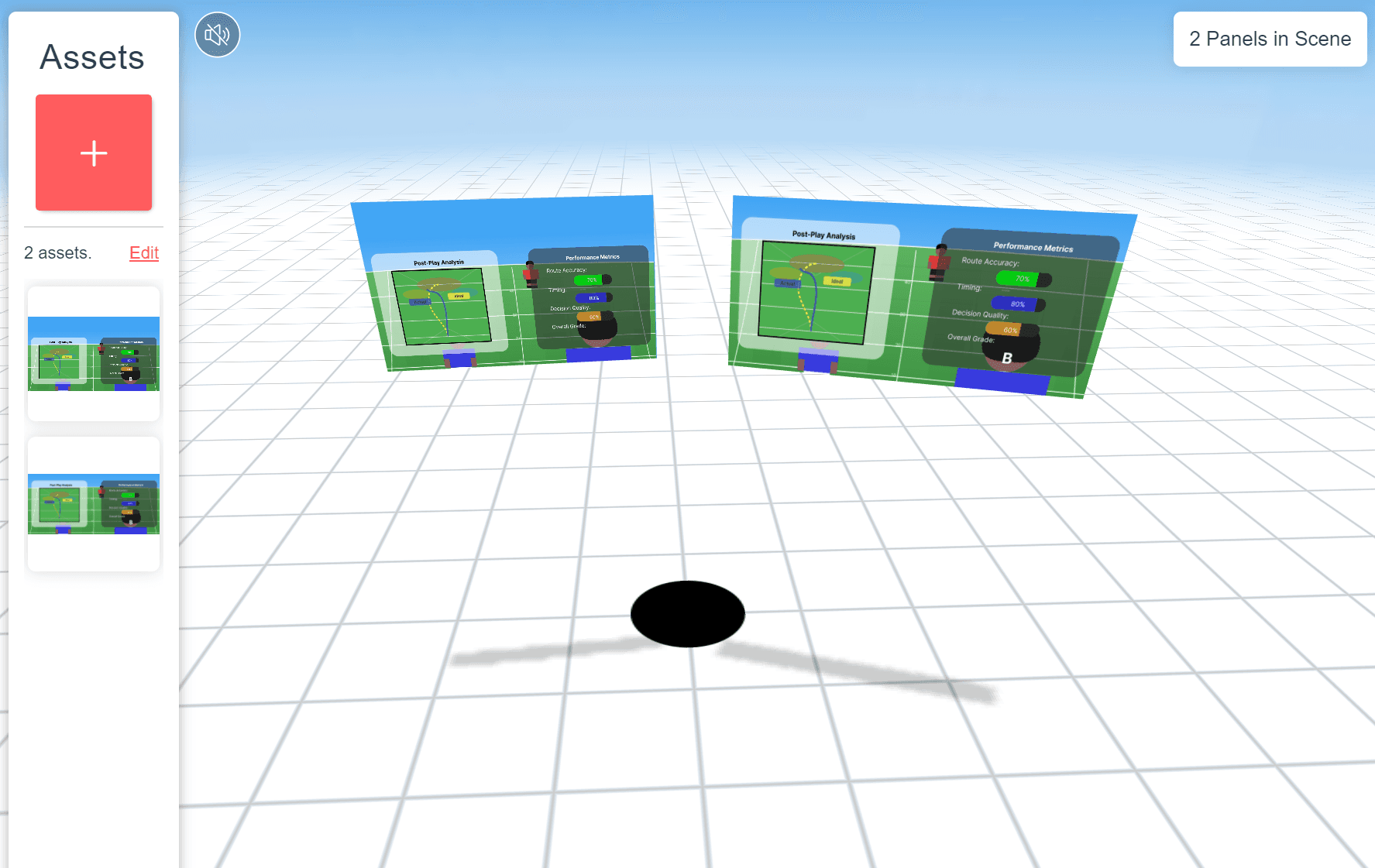
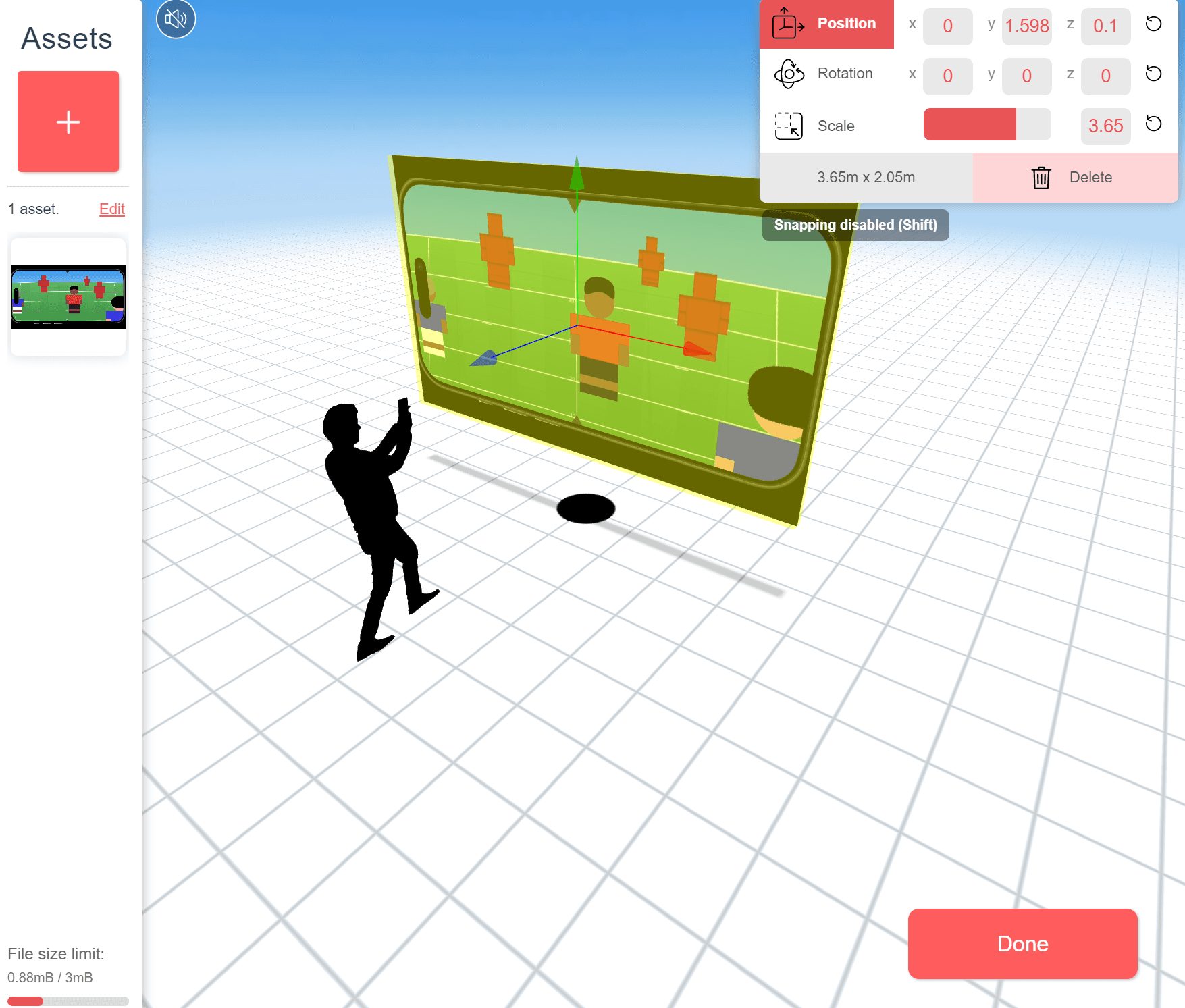
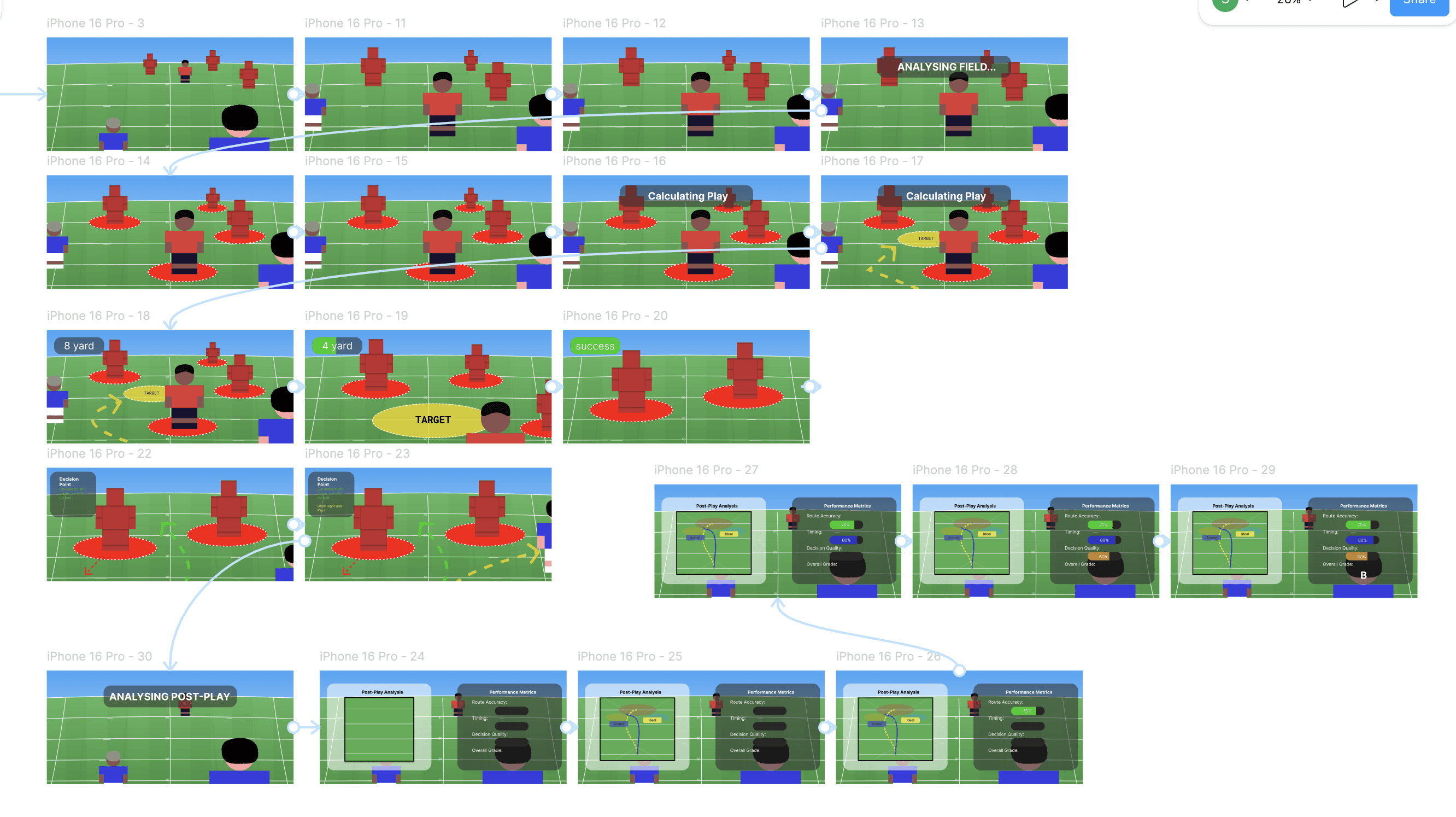
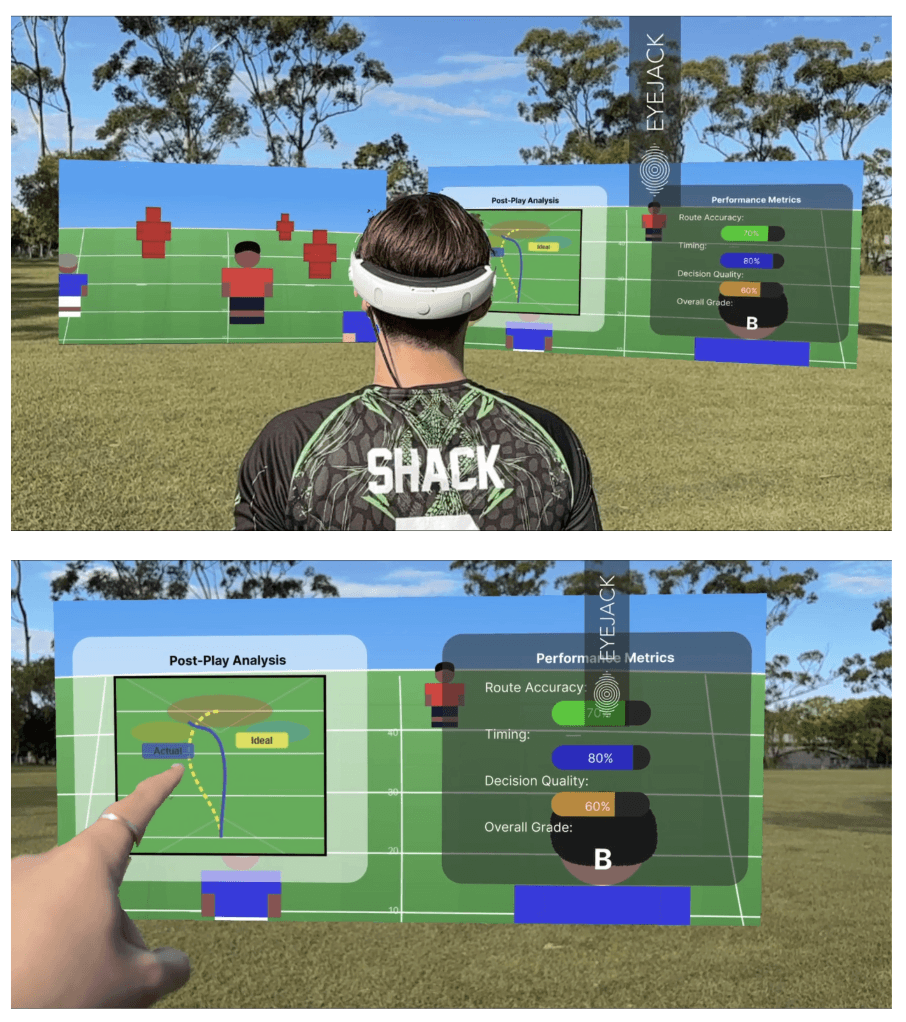
Prototypes were created using Figma and EyeJack to visualise how AR overlays would appear in real-world environments.Due to software and resource limitations, the prototype demonstrates intended interaction and information hierarchy rather than full AR functionality.
https://www.figma.com/design/qeiki6pQhlQJOxcCKyQoH8/Untitled?node-id=0-1&t=bj8uBEBjue8l6r32-1
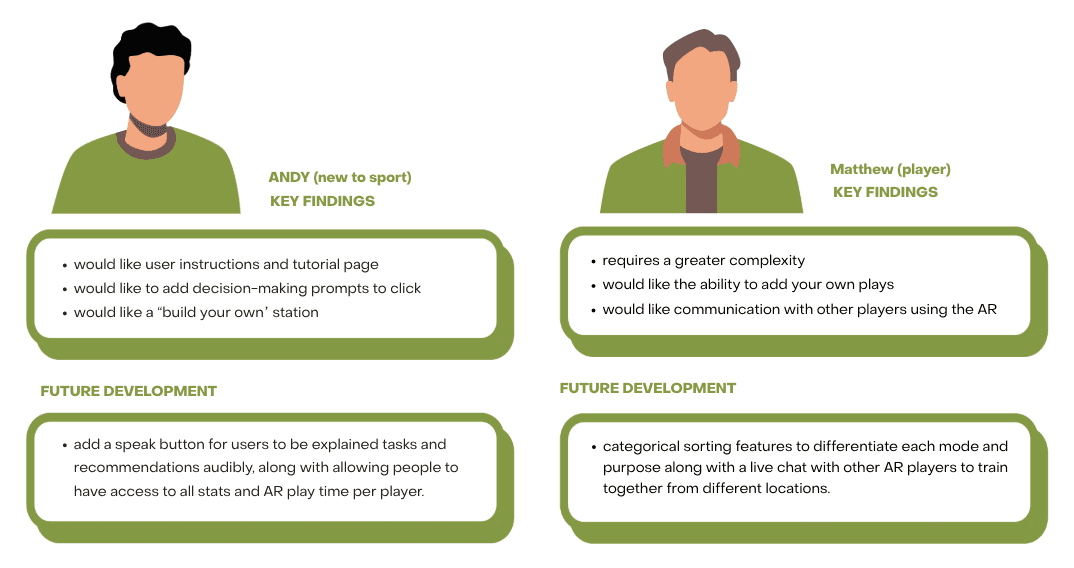
User testing was conducted with both a recreational player and an elite athlete to evaluate usability and perceived training value.
Beginners valued clarity, tutorials, and guidance
Experienced players wanted customisable plays and strategic depth
Both groups responded positively to real-time feedback
[please request login access if you would like to view]