
Context:
This UX research project was conducted in collaboration with Mettlesome, a real-world wellbeing and technology partner, to explore emotional sharing behaviours in social mood-tracking experiences.
Research Focus:
Understanding how users balance honesty, vulnerability, and privacy when sharing mood data with friends.
Outcome:
Evidence-based insights and design implications grounded in real user behaviour.
How might mood-tracking applications support honest self-reflection while respecting privacy and emotional boundaries in close friendships?
Given the sensitive nature of emotional wellbeing data, ethical considerations were central to the research process.
Informed consent was obtained from all participants, and research protocols aligned with expectations for industry-facing UX research.
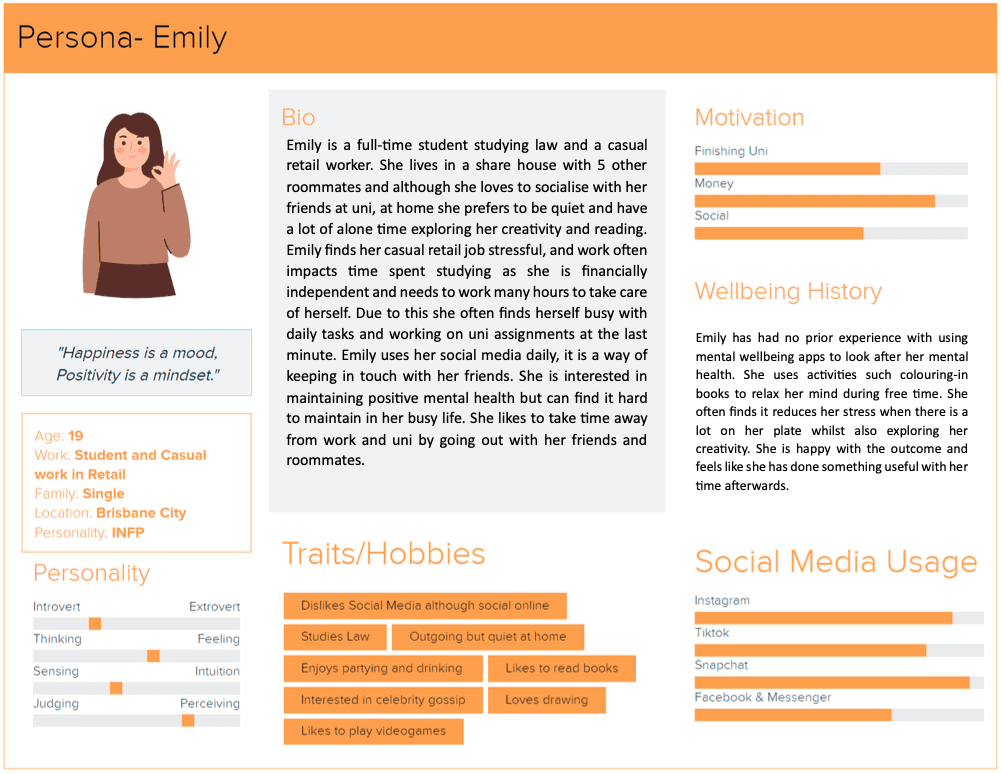
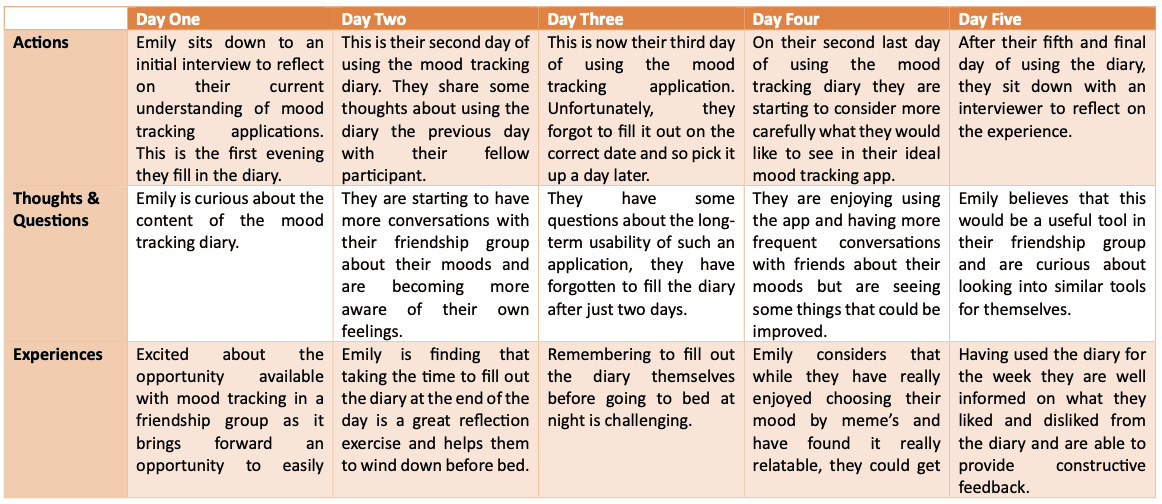
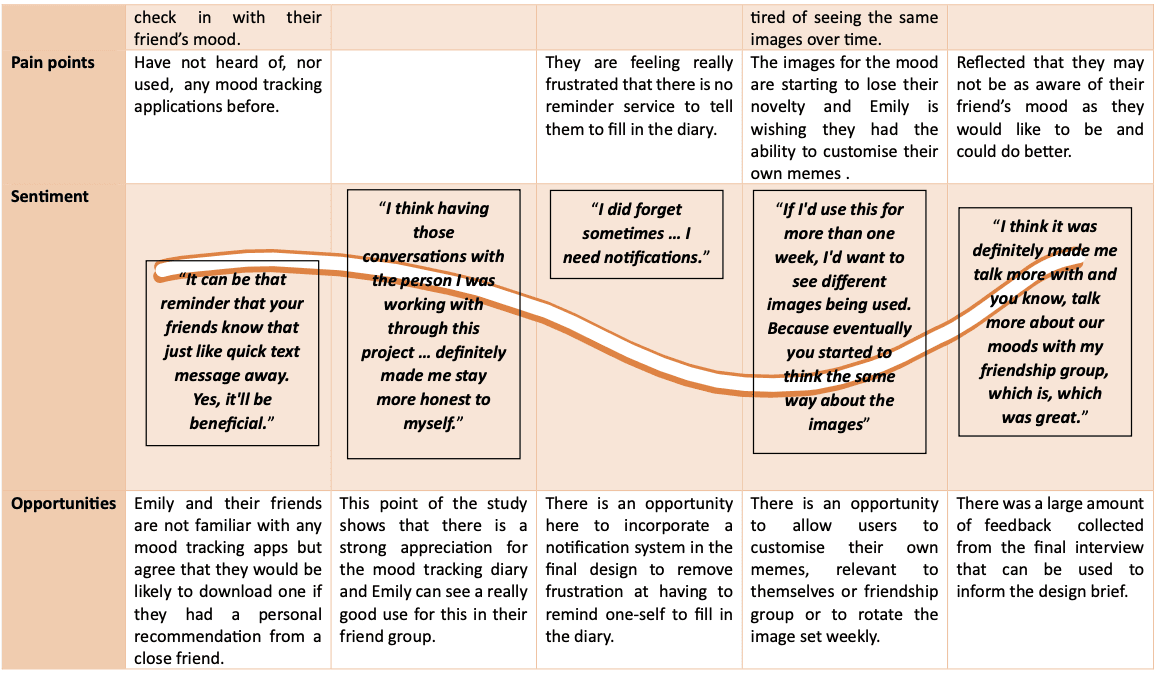
A persona and emotional journey map were created to visualise trust levels, sharing decisions, and emotional states over time.
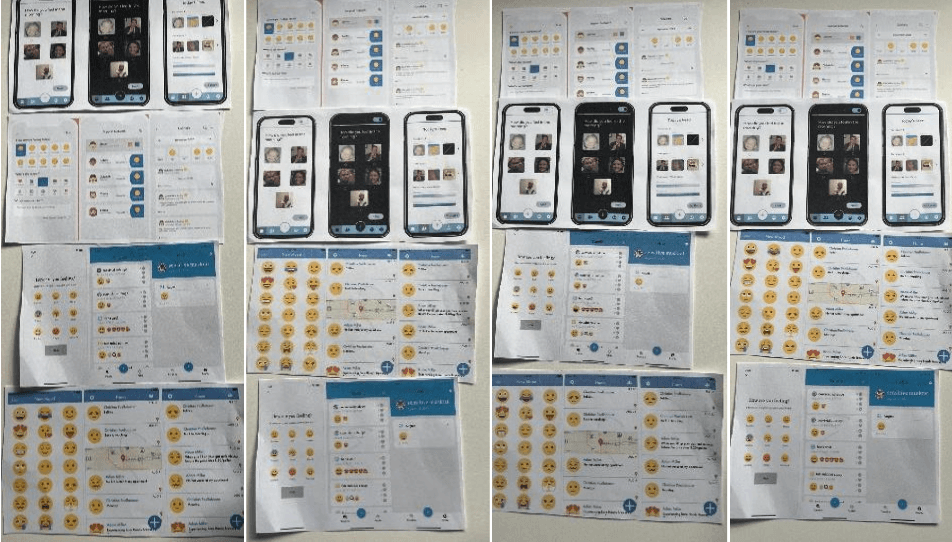
The card sorting task was used to understand how participants naturally group emotions, mood labels, and related features within a mood-tracking experience. This activity helped reveal users’ mental models and the language they felt most comfortable using when describing emotional states, particularly in a social context involving friends.
Insights from the card sorting informed decisions around information architecture and categorisation, highlighting where certain emotional terms felt intuitive, ambiguous, or uncomfortable. These findings helped shape a structure that prioritises emotional safety and clarity, ensuring that mood data is organised in a way that feels natural, non-judgemental, and supportive rather than prescriptive.
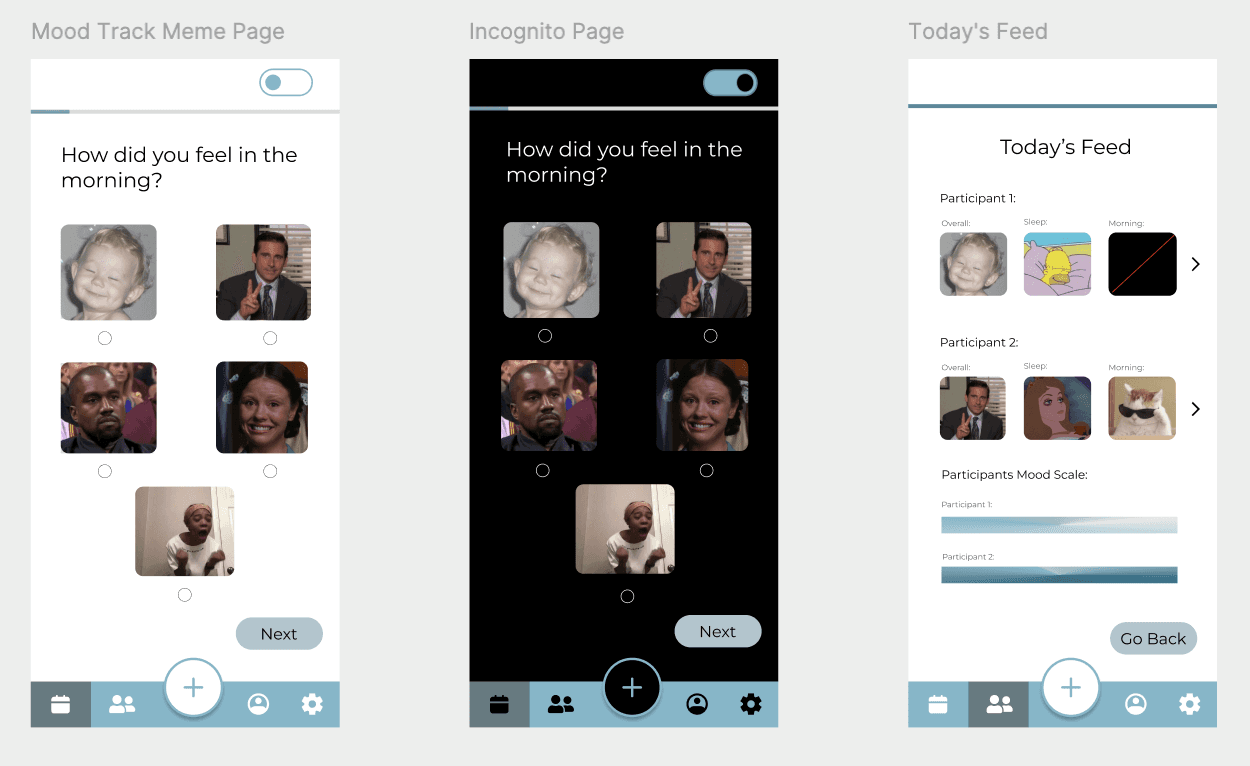
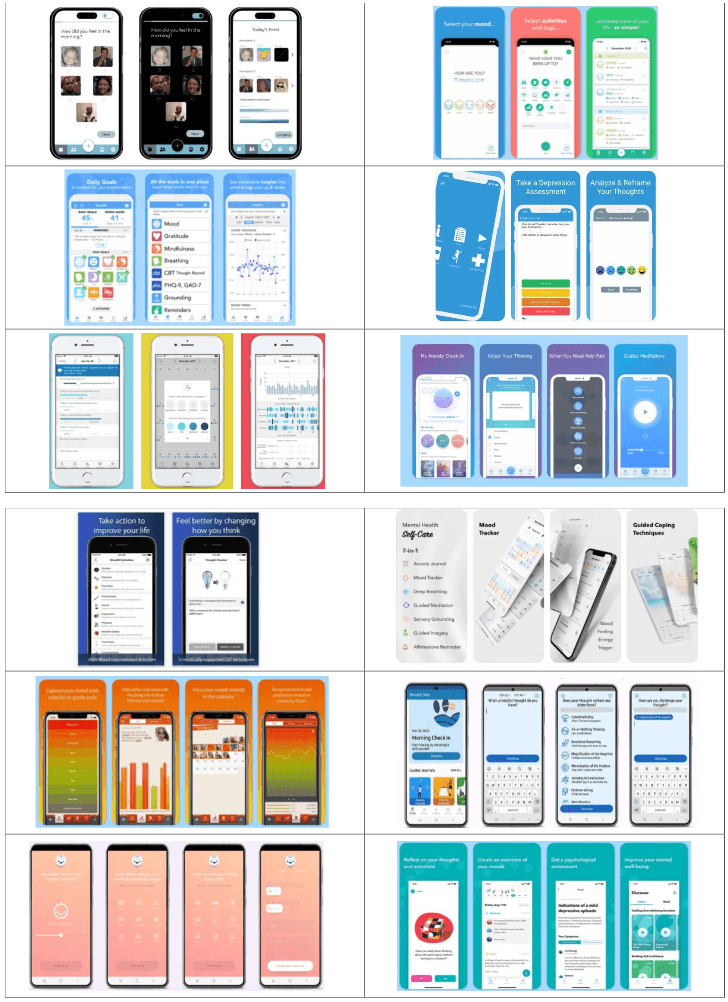
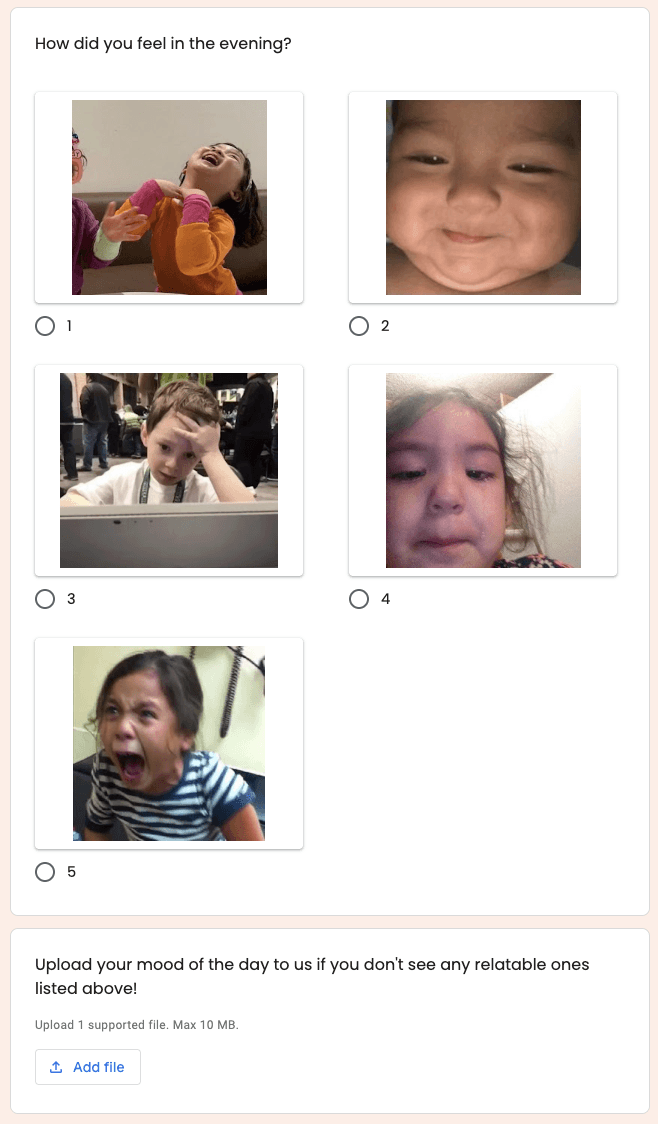
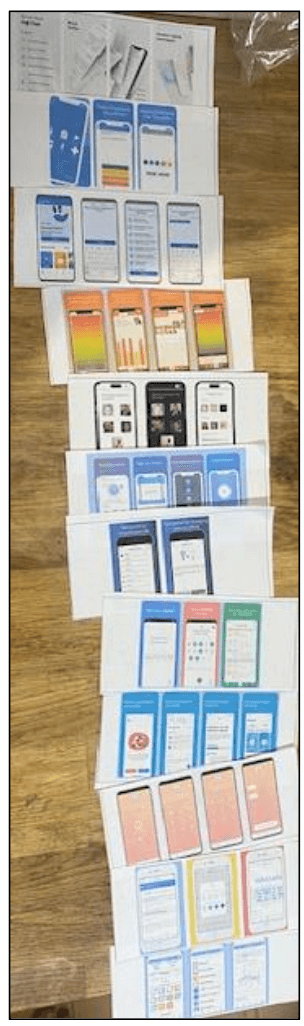
Memes were then explored as a mood-tracking mechanism because they offered a more natural, low-pressure way for users to express emotions without requiring precise labels or verbal articulation. Research findings showed that participants often struggled to accurately name their emotional state and felt discomfort when forced into explicit or performative sharing. Memes, by contrast, allowed users to communicate feelings through humour, relatability, and abstraction, making emotional expression feel lighter, more authentic, and socially familiar.
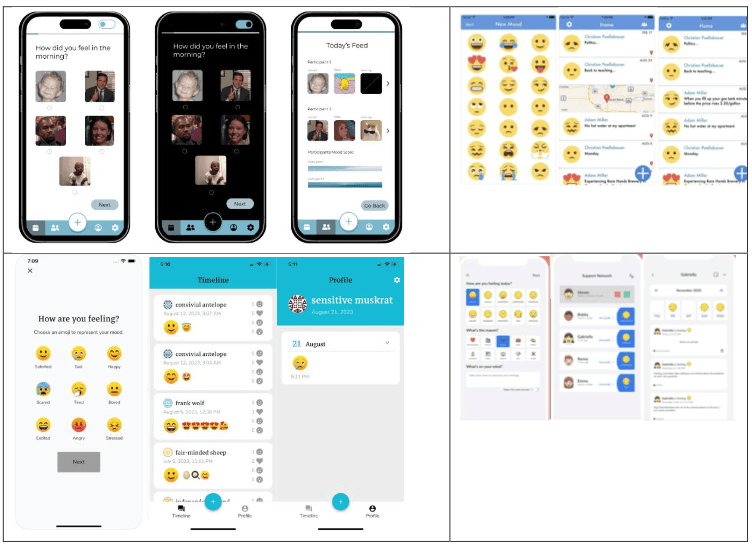
Using memes also aligned with how users already communicate emotions within close friendships, helping reduce emotional friction and increasing honesty without overexposure. This approach informed the Figma UI explorations below, where meme-based interactions were used to support selective sharing, emotional nuance, and a sense of control—translating research insights into interfaces that prioritise emotional safety while remaining engaging and intuitive.
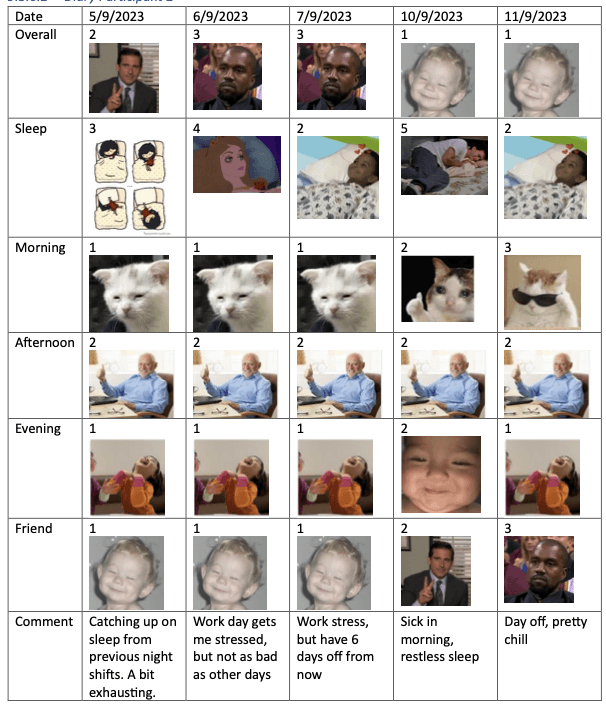
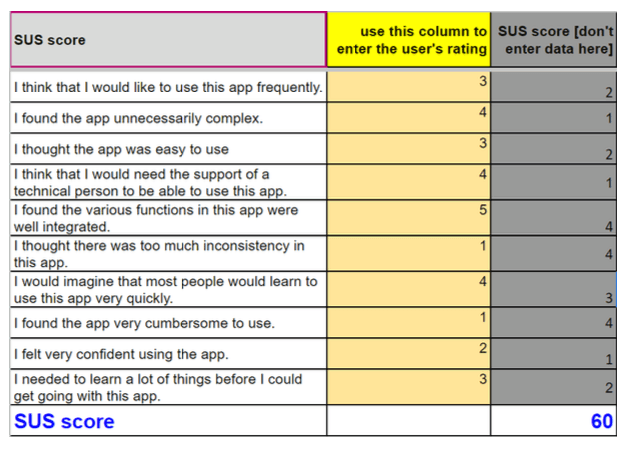
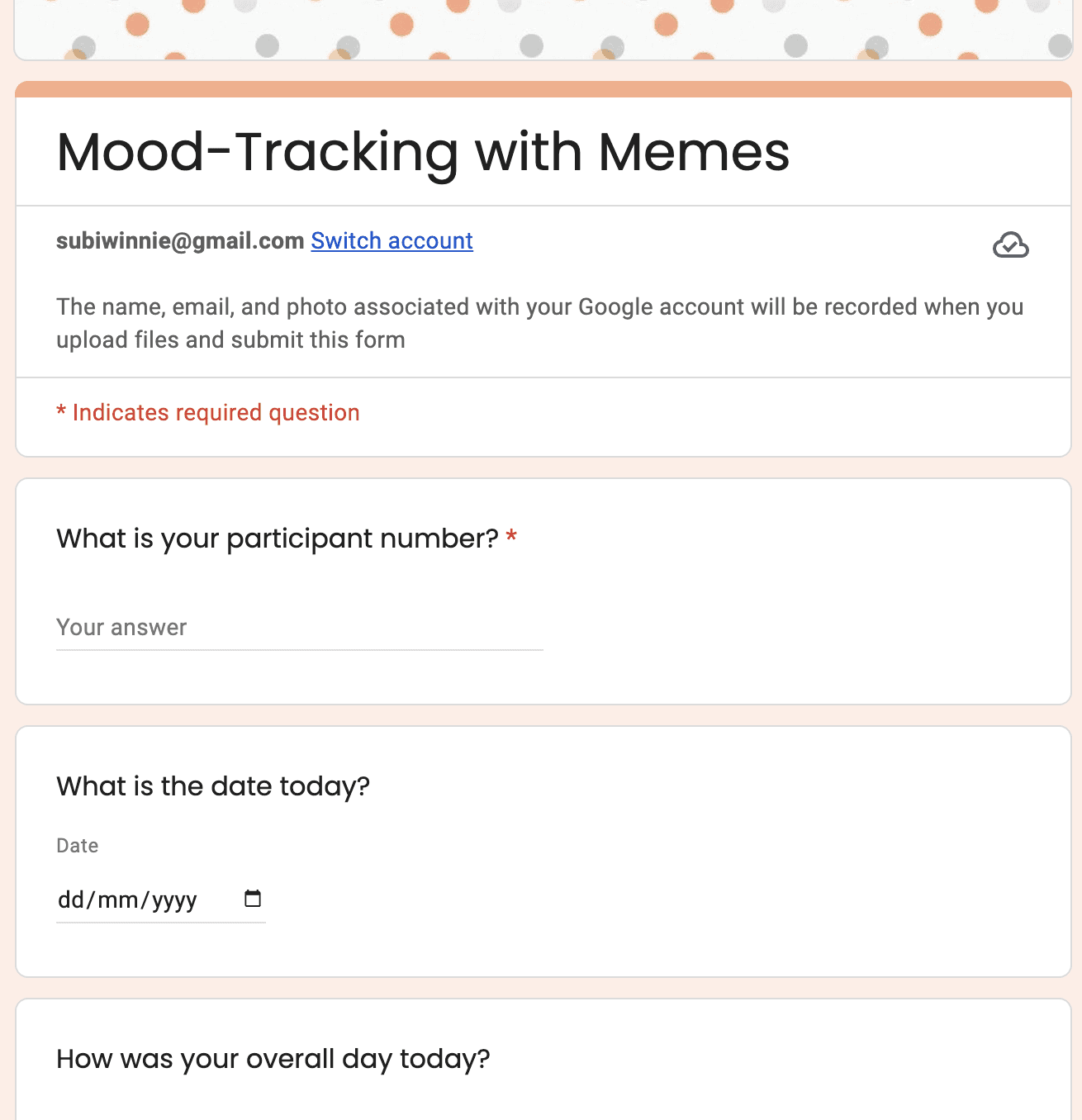
Findings from the diary study and survey revealed that participants often struggled to consistently label their emotions using traditional mood scales or predefined categories. Over time, users reported second-guessing their selections, feeling unsure whether a label fully captured how they felt, or avoiding logging altogether when emotions were mixed or ambiguous.
In contrast, when participants were introduced to meme-based mood expression, they found it easier to select content that “felt right” without needing to overthink accuracy or language. Survey responses indicated that memes reduced pressure around emotional performance and made mood sharing feel more natural, relatable, and aligned with how users already communicate emotions with friends. These insights directly informed the use of memes in the UI designs below, positioning them as a low-friction, emotionally safe alternative to traditional mood tracking inputs.
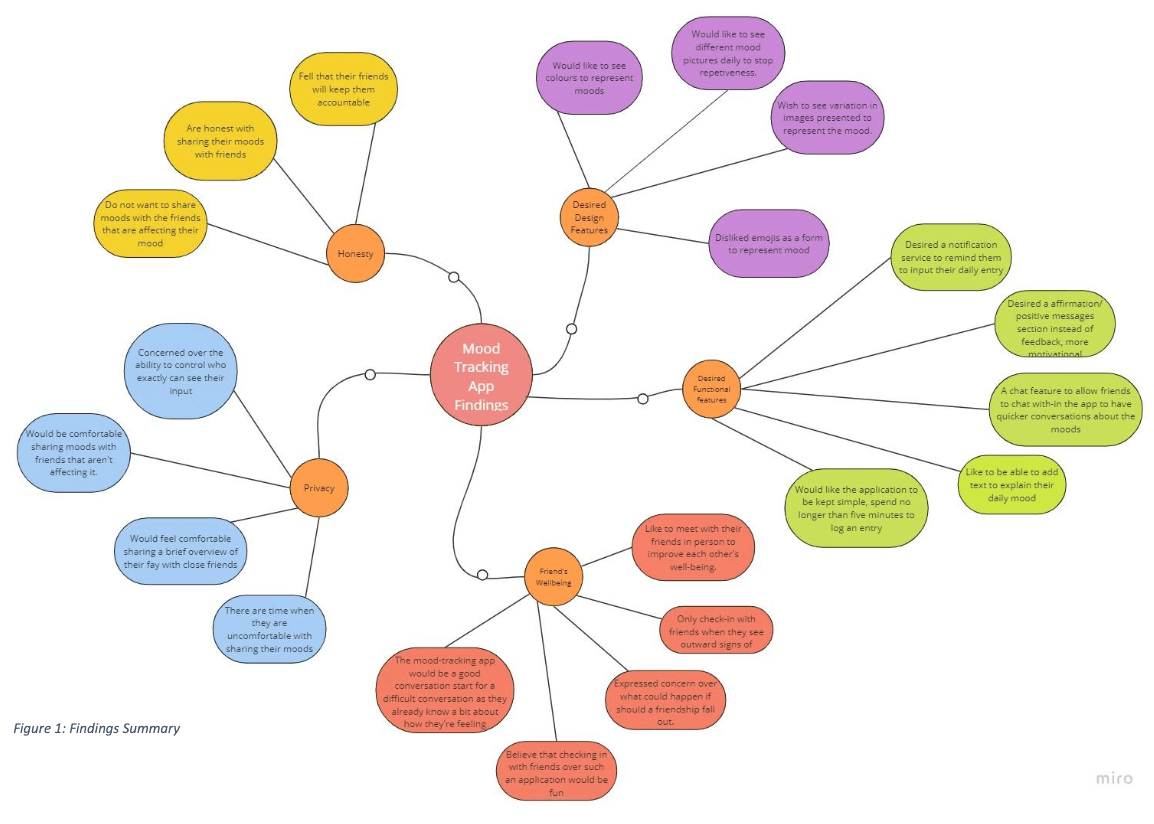
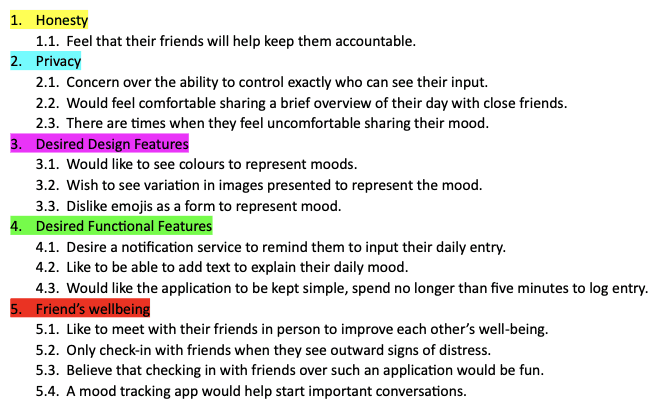
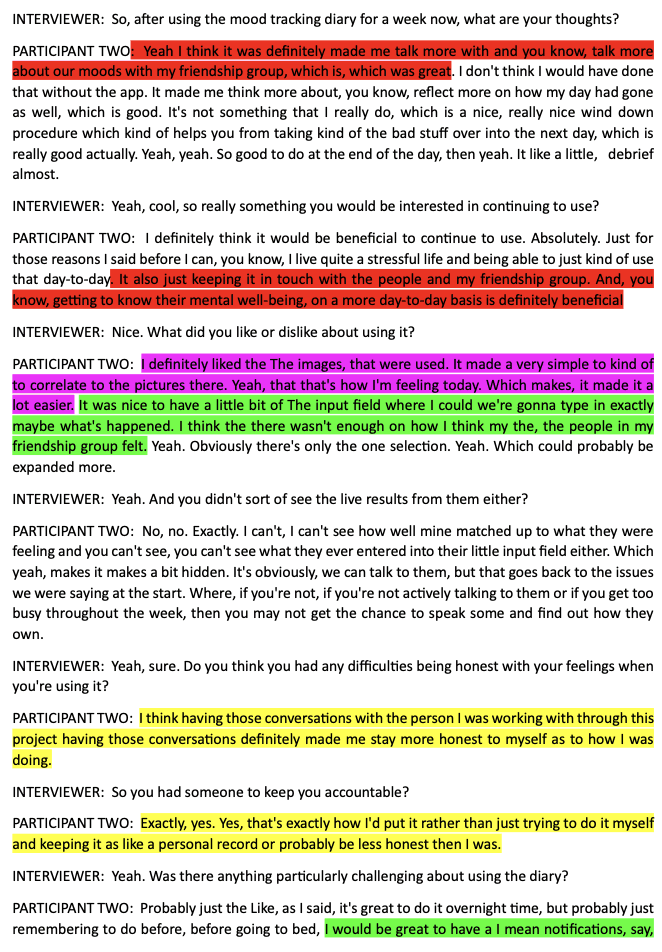
Semi-structured interviews were conducted and colour-coded during transcription to identify recurring themes, emotional patterns, and points of tension across participant responses.
Research revealed that users often struggled to label complex or mixed emotions and felt discomfort with overly explicit or performative mood sharing. Privacy and control were critical to emotional safety, with users being more honest when sharing felt optional. Familiar, abstract forms of expression—such as memes- felt more natural and socially aligned than traditional mood scales.
Analysis revealed several key behavioural insights:
Friends correctly identified each other’s moods less often than expected
Users were more honest when mood sharing felt optional rather than performative
Privacy controls were essential for emotional safety
Visual or abstract expression felt more comfortable than explicit labels
These insights suggested that mood-tracking experiences should prioritise low-pressure expression, selective sharing, and emotional abstraction over accuracy or completeness. Designs should support private reflection alongside social features and allow users to communicate how they feel without needing to fully articulate it.
Selective and controlled sharing rather than forced visibility
Private reflection spaces alongside social features
Low-pressure emotional expression using visuals or metaphors
Reduced emphasis on constant emotional transparency
These insights informed clear design opportunities for mood-tracking products:
Selective and controlled sharing rather than forced visibility
Private reflection spaces alongside social features
Low-pressure emotional expression using visuals or metaphors
Reduced emphasis on constant emotional transparencyThese insights informed clear design opportunities for mood-tracking products:
Selective and controlled sharing rather than forced visibility
Private reflection spaces alongside social features
Low-pressure emotional expression using visuals or metaphors
Reduced emphasis on constant emotional transparency
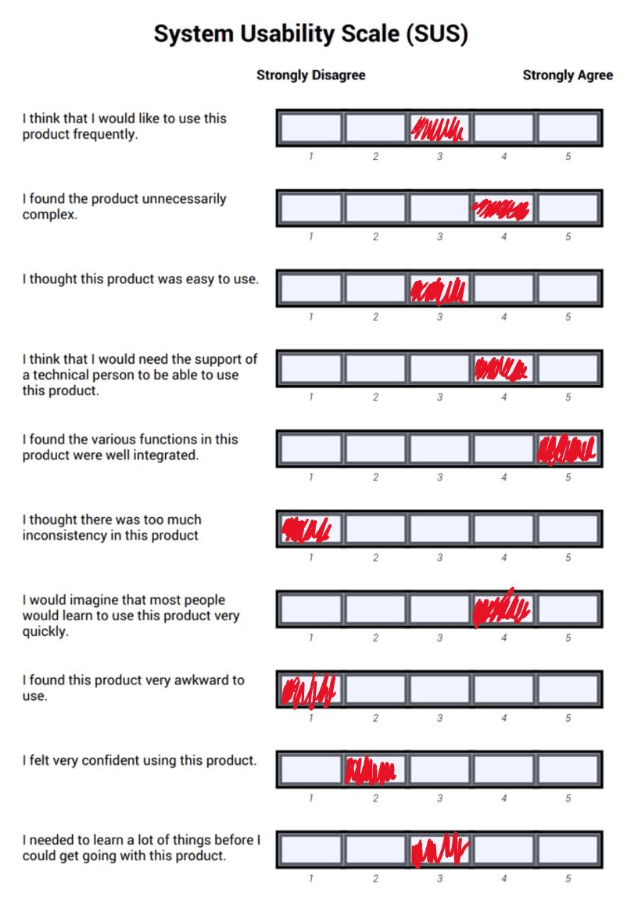
The concepts were evaluated through follow-up feedback sessions and a usability review focused on clarity, emotional comfort, and perceived ease of use. Participants responded positively to the meme-based mood selection, noting that it reduced pressure around emotional accuracy and made sharing feel more natural and approachable. Overall, the evaluation indicated that abstract, familiar forms of expression supported more honest engagement, while clear control over visibility helped maintain emotional safety- validating the research-led design decisions explored in the final UI concepts.
This case study has been intentionally condensed on my website to protect participant privacy. Additional details about the research process and findings can be shared upon request.
Private reflection spaces alongside social features
Low-pressure emotional expression using visuals or metaphors
Reduced emphasis on constant emotional transparencyThese insights informed clear design opportunities for mood-tracking products:
Selective and controlled sharing rather than forced visibility
A qualitative, ethics-approved research approach was used to ensure findings were credible, responsible, and suitable for real-world application.
Semi-structured interviews
5-day diary study
Card sorting
Thematic analysis
PROJECT SNAPSHOT
RESEARCH METHODS
KEY INSIGHTS
Research Question:
Participants & Ethics:
User Persona Research:
UI Exploration for effection Mood-Tracking:
Example Participants Interview:
Card Sorting:
Design Implications
Evaluation
UX Research
Qualitative Research
Wellbeing Design
User Interviews
Ethics-Led Design
Behavioural Insights
UX Research Study Project for Mettlesome

Survey Results: